
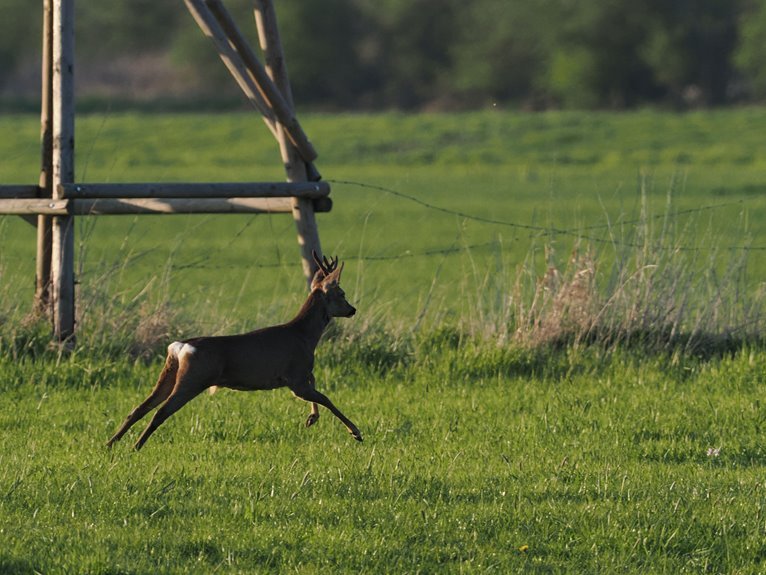
Healthy deer typically clear seven feet with ease, and some motivated ones jump eight feet or higher.
In USDA studies, panicked deer cleared a 5’11” fence without trouble.
A seven-foot fence represents the practical sweet spot, stopping most deer while costing less than eight-foot alternatives.
Your terrain matters too: open grassland requires taller barriers, while wooded areas need less height.
Matching your fence to your specific situation depends on these environmental factors.
How High Can Deer Actually Jump?
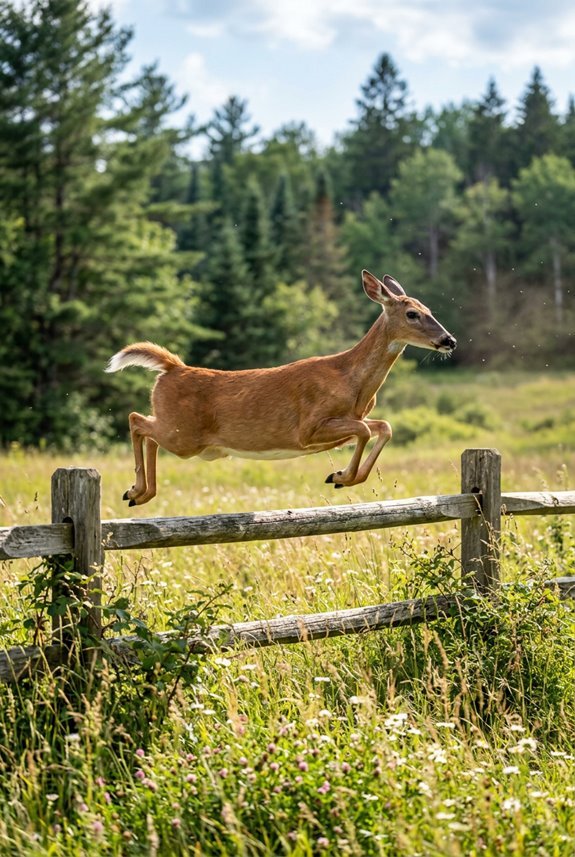
How high can a deer actually jump? Healthy deer typically clear 7 feet or higher with ease. Some can even reach 8 feet or more when motivated. Research shows that in controlled USDA experiments, panicked deer jumped a 5’11” fence without much trouble, though fewer attempted a 6’11” barrier. Deer fence height matters significantly for protection. Under normal circumstances, deer prefer not jumping unnecessarily high because they’re cautious animals. Certain situations, such as escaping predators or crossing unfamiliar terrain, can push them to attempt heights up to 10 feet, though this remains less common. Experts recommend 7–8 feet as an optimal deer fence height for most properties and situations based on these jumping abilities.
Tough durable deer fence; Protects landscape and crops from deer and other animals

Sturdy & Durable Fence Post: Made from 2 mm (0.08") thick Q235 carbon steel, this fence post offers high strength and rigidity. The U-shaped channel design improves bending resistance, while the powder-coated finish provides UV protection and corrosion resistance, ensuring durability in all weather conditions.
Matching Fence Height to Deer Pressure and Behavior
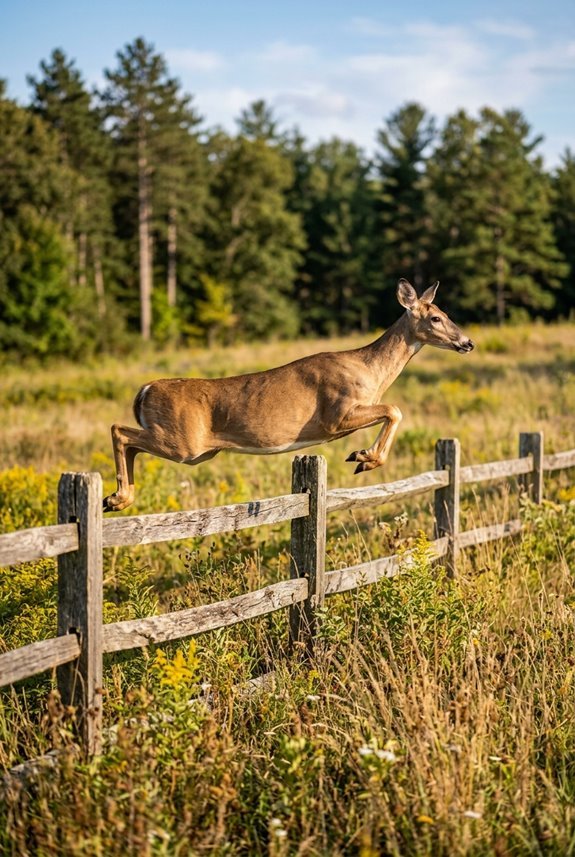
Understanding how high a deer can jump is just the first step—now we need to figure out what height actually works for your property. Deer fence height depends heavily on whether your deer are calm or stressed. In typical conditions, a 7-foot fence usually stops most deer from jumping. However, if you’re in an open area or dealing with high deer pressure, I’d recommend going up to 7.5 or even 8 feet for extra protection. Panicked deer behave differently than relaxed ones; they’ll push harder and jump higher when threatened. You should also consider your terrain. If deer have limited running space or an easy detour around your fence, they’re less likely to attempt a jump, which can actually lower the height you need.

Various Sizes for Your Needs:The deer fencing comes in two practical sizes: 8FT*165FT and 8FT*100FT. Whether you need to protect a small family garden or a large agricultural area, we have the perfect size for you. The large coverage area ensures comprehensive protection for your plants.

Various Sizes for Your Needs:The deer fencing comes in two practical sizes: 8FT*165FT and 8FT*100FT. Whether you need to protect a small family garden or a large agricultural area, we have the perfect size for you. The large coverage area ensures comprehensive protection for your plants.

Use these posts with all 7.5' high freedom deer fence
Why Wooded vs. Open Land Changes Your Fence Needs
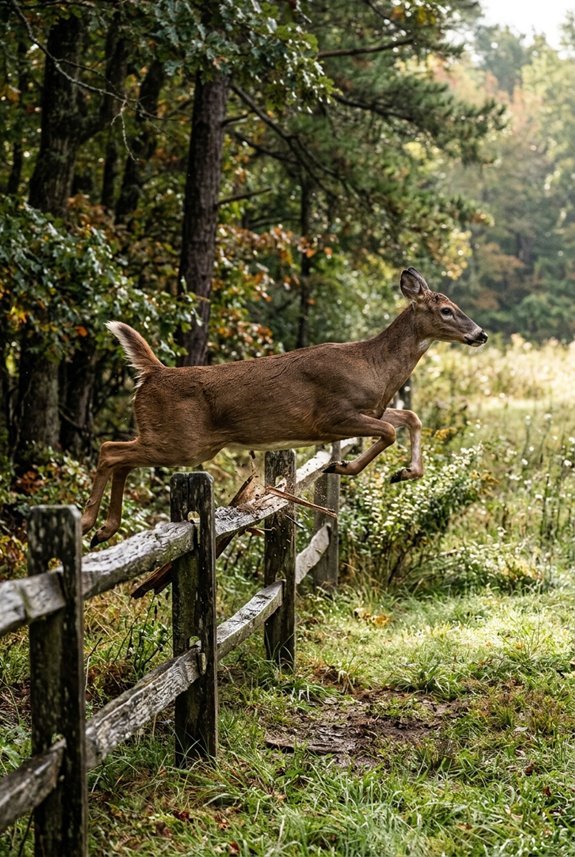
Ever notice how deer behave differently depending on where they live? Landscape type drastically changes your deer fence questions and solutions. In open fields, deer have clear running starts and fewer escape options, so they’ll jump higher, often reaching 8 feet or more. Wooded areas present a different situation. Dense vegetation limits their approach speed and gives them alternative routes around obstacles.
| Environment | Running Start | Jump Likelihood | Recommended Fence Height |
|---|---|---|---|
| Open grassland | Long, clear | Very high | 8+ feet |
| Wooded area | Limited | Moderate | 6 feet |
| Dense forest | Minimal | Low | 5-6 feet |
| Garden with trees | Restricted | Low | 5-6 feet |
Trees, shrubs, and limited sightlines make deer hesitant jumpers. They’ll simply detour instead.

UPGRADED REINFORCED AND ENCRYPTED EDGES WITH ROPES: Quick installation with tangle-free setup, securely fastening to the ground or posts for enhanced protection. The 5/8” square mesh effectively restricts animal movement, providing safety for your garden, poultry, and pets
UPGRADED REINFORCED AND ENCRYPTED EDGES WITH ROPES: Quick installation with tangle-free setup, securely fastening to the ground or posts for enhanced protection. The 5/8” square mesh effectively restricts animal movement, providing safety for your garden, poultry, and pets

COMPLETE PROTECTION KIT - Professional-grade 7ft x 100ft deer netting with 3/4" fine mesh that effectively blocks deer, rabbits, birds, and small pests. Includes 10 metal landscape staples and 50 zip ties for immediate installation - everything you need in one package.
The 6-Foot Fence: When It Works and When It Fails
Why is a 6-foot fence so tricky? It works beautifully in some situations but fails spectacularly in others. When deer feel cornered or genuinely hungry, they’ll push past what should stop them. Studies show panicked deer can jump nearly 5’11”, dangerously close to your fence height.
Fence height matters most when combined with other factors. In open areas where deer get running starts, a 6-foot barrier becomes surprisingly vulnerable. They’ve got momentum working for them. But in wooded spaces with limited approach angles, that same fence often holds strong.
I’d recommend adding outward slants or considering taller options if deer pressure is intense in your area. A 6-foot fence alone may not provide adequate protection against determined deer in high-pressure situations.

REPELS DEER AND RABBITS: Deer and rabbits don’t have to eat vegetation for the repellent to be effective—they have a natural aversion to the scent

Size: Deer netting size 7 feet x 100 feet; garden netting mesh size 3/4"; color: black; Easy to use accessories included: 10pcs installation nails & 50pcs cable ties

a Bounty of Streamers: the package includes a generous 50 pcs 1.18 x 24 inch deer fence warning streamers, offering ample supply for extensive coverage and multiple fencing projects
The 7-Foot Fence: The Practical Sweet Spot
So what’s the magic number when you’re looking for real deer protection? Seven feet is the answer. This deer fence height strikes the perfect balance between what actually works and what you can afford to build. Research shows that while some deer can clear a 5’11” fence, very few will jump a 6’11” barrier. At seven feet, deer typically hesitate to attempt the jump. Their poor depth perception works in your favor here. They’re reluctant to attempt jumps at this height unless they’ve got a long, open running start. I recommend seven to eight feet for most situations. Seven feet handles typical backyard scenarios nicely, keeping costs reasonable while delivering genuine protection. If you’ve got an especially open property, eight feet provides additional security.

Sturdy Structure: The wire fence is woven from high-quality 12-10gauge steel wire with a hot-dip galvanized surface. It has high hardness, durability, and excellent corrosion resistance, ensuring long-term use.

WIDELY USED - Farm Fence also called Grassland Fence,Cattle Fence,Livestock Fence Deer Fence and Field Fence which is a widely used in all terrains,like farm,orchard,corrals,pastures,grassland,forestry and highway.

Life Span 10-15 Years
The 8-Foot Fence: Overkill or Necessary Insurance?
While an 8-foot fence does stop nearly every deer, the real question is whether you actually need that extra height, given what the data and your wallet tell you. The USDA research shows that calm deer rarely clear 7 feet, and most of my neighbors who chose 7-foot fencing report success, which suggests you might get solid protection without the extra cost of shipping, installing, and maintaining that additional foot. If you’re in a high-pressure area where deer are stressed and jumping frequently, that 8-foot barrier provides additional security. For typical situations, however, a 7-foot fence offers the best balance between effective protection and practical spending.

Sturdy & Durable Fence Post: Made from 2 mm (0.08") thick Q235 carbon steel, this fence post offers high strength and rigidity. The U-shaped channel design improves bending resistance, while the powder-coated finish provides UV protection and corrosion resistance, ensuring durability in all weather conditions.

Wider Gate Design: Patent Protection in Progress:Garden Fence Has A 21 In(W) Door, Which Greatly Improves The Problem of Inconvenient Access for People and Animals. The Low Threshold Design of The Dog Fences Indoor also Makes Getting in and out Safer and Less Likely to Trip. Dog Fence Outdoor Yard Comes with A Leash for Easy Carrying and Storage

Pack contains 5 pcs 7 feet long fence U post stakes with 1.5 foot under the ground, great for 5ft and 6ft high welded wire fencing, chicken wire, electric fence wire, poultry netting, hardware cloth, snow fence and other utility fence to build a temporary enclosure to keep animals in or out of certain areas
Cost-Benefit Analysis Trade-Offs
When you’re deciding how tall your deer fence should be, you’re really asking yourself: what level of protection do I actually need, and what’s it worth to me?
Most people land on seven feet as their sweet spot for deer fencing height. It keeps out panicked deer nearly all the time without draining your budget. An eight-foot fence works better, sure, but it costs significantly more to build and ship. You’ll pay more for materials, labor, and installation.
Seven feet gives you solid protection for reasonable money. Eight feet offers insurance against rare jumping situations, but for most yards, that extra expense doesn’t match the actual risk you’re facing. Choose seven feet unless you’ve got specific reasons to go higher.
Real-World Jump Behavior Data
The seven-foot fence makes sense on paper, but I want to show you what actually happens in the field. When I studied real deer fences, I found something interesting: panicked deer will jump nearly anything under six feet, yet they rarely clear seven feet. That’s your sweet spot.
Eight-foot deer fences are technically stronger. Most deer won’t attempt them anyway. The jump gets exponentially harder at that height. Installation costs spike too, and few homeowners see the payoff.
I’ve watched calm deer hesitate at seven feet. Spooked ones might test it, but they typically fail. Seven to seven-and-a-half feet gives you reliable protection without excessive expense. That’s the real-world math that works.
Seven-Foot Practical Alternative Option
So does your deer problem really demand an eight-foot fence, or will seven feet do the job? I’ve found that seven-foot deer fence height works well for most homeowners. Research shows panicked deer rarely clear 6’11”, making seven feet a practical sweet spot.
| Fence Height | Cost Level | Effectiveness |
|---|---|---|
| 6 feet | Low | Limited |
| 7 feet | Moderate | High |
| 8 feet | High | Marginal gain |
I recommend starting with seven feet, then adding features like multiple strands or electric components if deer still visit. This approach saves money while protecting your garden effectively. Deer can jump higher in extreme cases, but that’s rare. Countless gardeners have found that seven feet handles deer problems without excessive expense.
What to Do If You Can’t Build 8 Feet Tall
If you’re working with budget or space constraints, a 7-foot fence offers solid real-world results for most situations, stopping the majority of deer without the expense of going full height. When even 7 feet isn’t possible, you can get creative with double-fence setups or angled designs that mess with a deer’s approach and landing zone. Both strategies are detailed below so you can pick what works best for your property and wallet.

Power Source Type: Manual

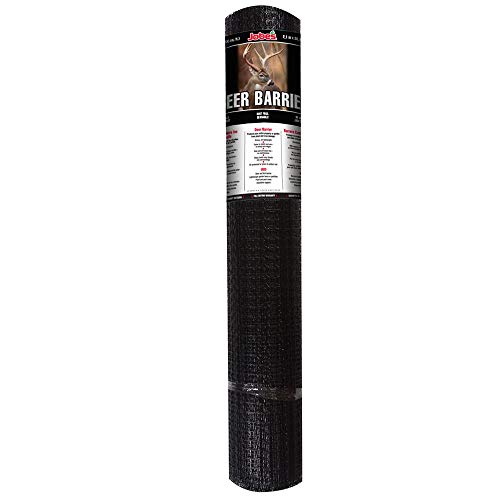
Tough durable deer netting; Protects landscape and crops from deer and other animals

Extra-Tall Deer Protection: At 60 inches high, this deer fence netting is specially designed to prevent jumping and climbing from whitetail deer and other large animals.
Seven-Foot Fence Strategy
What if you can’t quite reach 8 feet with your fence budget or property setup? A seven-foot deer fence height is your practical sweet spot. This approach works remarkably well for most situations. Studies show that while panicked deer might jump around 5’11”, a 7-foot barrier stops them nearly all the time. You’ll spend less money than building 8 feet, yet you’re still getting solid protection for your garden or property. The key is proper design. Make sure your fence stands straight and sturdy. If you’ve got space where deer can build up speed before reaching your fence, consider adding optional deterrents like angled extensions or motion sensors. Seven feet handles most deer pressure effectively without breaking your budget.
Alternative Barrier Designs
When an 8-foot fence isn’t realistic for your situation, you have solid options that will still keep deer out most of the time. Two fences spaced 4–5 feet apart work surprisingly well, even though they’re only 4–5 feet tall each. The gap between them confuses deer because they can’t judge the jump properly.
You can also boost a 6-foot fence height with outward 45-degree slanting or add an electric component for extra deterrence. For temporary protection while planning permanent solutions, portable options like polytape or peanut butter fences work well on smaller properties. These short-term barriers are effective for acre-or-less areas.
Match your fence height and design to your specific deer pressure and property layout for optimal results.
Why 3D Fences Outperform Single-Wire Designs
Why Deer Hesitate at 3D Fences Versus Single-Wire Designs
Deer will leap over a single wire but hesitate at a 3D fence because the irregular structure confuses their depth perception. Unlike a simple wire, a 3D fence combines multiple layers that disrupt how deer judge distance and spatial relationships. They cannot easily determine where the barrier begins or ends.
When deer approach these fences, they perceive the unpredictable weave as genuinely difficult to breach. The hesitation stems from this uncertainty. A single wire presents a clear obstacle to jump. A 3D design creates risk and visual confusion.
Electric components enhance this effect without requiring massive heights. The multi-layer configuration provides redundancy; if one section fails, others continue protecting your property. This design solves the deer fence problem through multiple backup systems working together.

Humane Protection – Helps keep out hungry and destructive deer and other critters from your garden, protecting fruits, vegetables, and flowers. A practical and humane alternative to expensive metal fences, chemicals, and traps.

COMPLETE PROTECTION KIT - Professional-grade 7ft x 200ft deer netting with 3/4" fine mesh that effectively blocks deer, rabbits, birds, and small pests. Includes 20 metal landscape staples and 50 zip ties for immediate installation - everything you need in one package.

Highly Effective Deer & Animal Barrier: Specifically designed to deter deer and protect fruit trees & gardens from foraging. Also effectively keeps out rabbits, chickens, and other small to medium-sized animals. The deer fence netting is highly visible to wildlife, providing an effective psychological and physical barrier to safeguarding your plants, vegetables, fruit trees, flower beds and orchards
Electric Fencing as an Alternative to Height Alone
Can you keep deer out without building a fence taller than your house? Electric fencing offers a smarter approach. Rather than relying solely on height, electric fencing delivers a startling shock to a deer’s nose or neck, creating a powerful deterrent. You’ll need a strong energizer that overcomes the deer’s natural resistance, and you must keep it running continuously, especially during your first month of installation. Combining electric fencing with traditional barriers like woven wire works better than either method alone. Multiple wire strands positioned at different heights create confusion for deer trying to cross. This combination approach provides effective protection without constructing an impossibly tall structure.

Mesh . 63Inx. 75in

UPGRADED WEIGHT & WOVEN DESIGN - Our plastic fencing features 55 gsm heavy-duty HDPE, 4-6 times heavier than regular deer nets. Besides, together with tight woven design, which makes the mesh fence extremely sturdy and more durable, it holds up well against stretching, tearing, UV exposure, and harsh weather, effectively keep deer, dogs and other animals out of gardens
Permanent Fencing Options That Guarantee Exclusion
How much protection do you actually need? Permanent fencing offers genuine protection when deer pressure runs high on your property.
| Fencing Type | Fence Height | Best For |
|---|---|---|
| Woven Wire | 8–10 feet | Year-round crop protection |
| Solid Wire | 10 feet | Residential settings |
| Slanted Seven-Wire | 7 feet | Electric deterrent zones |
Woven wire fencing provides the most effective permanent solution, though installation costs and complexity are substantial. Use it when you require reliable exclusion.
For moderate pressure, consider offset fencing: an outside electric fence at five feet paired with an inside fence at thirty inches. This two-layer approach delivers results without excessive expense.
Solid wire requires ten feet minimum height in residential areas. Combining barrier height with electric shock creates the strongest defense against determined deer.

Robust Construction This cattle farm fence built with heavy-duty 14-gauge galvanized steel wire – 23% thicker than standard 16-gauge fences – to withstand cattle charges, wild boar impacts, and extreme weather without bending or sagging

Robust Construction This cattle farm fence built with heavy-duty 14-gauge galvanized steel wire – 23% thicker than standard 16-gauge fences – to withstand cattle charges, wild boar impacts, and extreme weather without bending or sagging
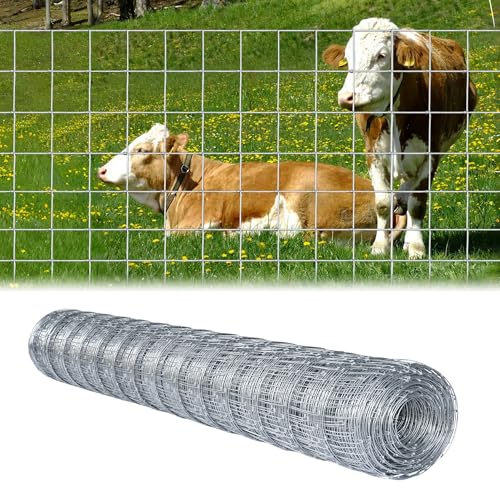
New High- density Fence: Goat fence is woven with high-quality hot-dip galvanized steel wire, and the surface is hot-dip galvanized. The wire mesh has good hardness, is strong and durable, and the farm fence also has good formability and flexibility. If you are willing to buy high-end products, this goat fence is your best choice,
Temporary Fencing Solutions for Smaller Areas
Two practical temporary fencing options work well for smaller properties where deer pressure is moderate. You can set up a peanut butter fence for areas under an acre. It uses corner posts, 17-gauge wire, fiberglass rods, and foil strips baited with peanut butter to attract deer and condition them to avoid the area. If you need something more portable for a slightly larger space, a polytape fence with fiberglass corner posts and two strands of polytape might serve you better. Both solutions require weekly checks to keep the lure fresh and ensure everything stays grounded and effective.
Peanut Butter Fence Setup
What’s the secret to keeping deer out of your garden without building a permanent fortress? A peanut butter fence offers a clever, temporary solution for smaller properties, typically one acre or less with moderate deer pressure.
Here’s how to set one up:
| Component | Purpose |
|---|---|
| Corner posts | Anchor the entire structure |
| 17-gauge wire | Creates the barrier framework |
| Fiberglass rods | Hold wire at consistent deer fence height |
| Peanut butter-smeared foil | Attracts and alerts deer |
Place corner posts first, then run wire strands. Insert fiberglass rods at intervals and attach foil strips coated with peanut butter mixture. This setup works because deer detect the lure, touch the wire, and learn to avoid the area. Check weekly for damage and ensure proper grounding. While not permanent, this method provides effective short-term protection.
Polytape Fence Installation
When you’re protecting a property that’s bigger than an acre but still want to avoid permanent construction, a polytape fence is an effective option. This temporary deer fencing works well for moderate deer pressure areas.
I set fiberglass corner posts, install 4-foot rods, and thread two polytape strands through insulators. The visibility combined with an electric shock creates a strong deterrent. The polytape itself acts as a visual barrier that deer hesitate to cross.
I check my fence weekly for damage and ensure grounding stays intact. This maintenance keeps everything working safely. While this setup requires more effort than simpler methods, it’s less demanding than permanent fencing. For mid-sized properties, it delivers effective results.
Maintenance And Monitoring Needs
How do you know if your temporary fence is actually working? I check mine weekly for damage and grounding issues. Regular inspections catch problems before deer exploit them. I walk the perimeter looking for gaps, bent posts, or loose polytape. Under moderate deer pressure, I pay extra attention to corners and tensioned lines, as these spots take the most stress. I also verify my peanut butter lure remains fresh and effective, since that’s what trains deer to respect the barrier. Temporary fences demand consistent attention. Pairing these checks with visual deterrents like flagging helps redirect deer away. You’re not just installing a fence; you’re actively managing your space. This commitment determines whether fences work or fail.
Height and Placement Errors That Let Deer Through
Even though you’ve built a fence that’s tall enough to stop most deer, height alone won’t guarantee success because placement mistakes create easy escape routes.
Deer are clever enough to exploit gaps you might overlook. Watch for these common installation errors:
- Gaps at posts where deer can squeeze through
- Poor ground clearance leaving space for crawling underneath
- Insufficient fence tension creating sagging sections
- Bottom clearance issues that don’t account for terrain slopes
- Low visibility fencing that doesn’t deter approach attempts
Even an 8-foot fence height fails when installation errors exist. Determined deer will find their way through careless gaps. Inspect your entire fence perimeter carefully, checking ground contact at every point. Proper placement matters as much as fence height itself.
How to Install and Maintain Your Chosen Design
Once you’ve settled on your fence height and avoided those installation pitfalls, the real work begins: getting the fence in the ground properly and keeping it that way. Solid installation makes the difference between a fence that works and one that deer casually hop over.
Start by setting posts deep, at least two feet into the ground for standard fence height. Space posts every six feet for stability. Use quality materials that won’t rot or weaken quickly. Check your fence height regularly, especially after heavy weather, since settling soil can lower posts over time.
Maintenance is essential. Inspect the fence monthly for damage or sagging sections. Keeping everything taut and secure ensures your chosen height actually protects what matters.
Building a Custom Fence Plan for Your Land
What works for your neighbor’s property might not work for yours, so building a custom fence plan requires examining your specific situation. Successful deer exclusion depends on factors unique to your land.
Consider these key elements when designing your approach:
- Land topography: Sloped terrain makes jumping easier for deer
- Running space: Open areas give deer momentum for higher jumps
- Deer pressure: High-traffic zones need 7.5–8 feet; quieter areas may need only 5–6 feet
- Fence posts: Sturdy, properly spaced posts support your chosen height effectively
- Additional deterrents: Double fences or angled designs improve success rates
Measure your property, note where deer enter, and evaluate local pressure levels. Then match your fence height accordingly. This creates a barrier that effectively protects your land.