I’d look for acrylic that’s at least 3–5 mm thick with fiberglass reinforcement, as this combination resists cracking and heat loss. Tap the tub. A solid sound indicates good base support, while hollow sounds signal weak construction. Check for ASME and IAPMO certifications, smooth high-gloss surfaces without specks, and UV inhibitors that prevent yellowing. Quality drain seals are essential. A 5–10 year warranty provides documented protection for your investment. These specific criteria directly determine whether a tub will maintain structural integrity and performance over two decades.
Understand What Makes a Durable Acrylic Bathtub
What’s the difference between an acrylic tub that lasts decades and one that cracks or flexes after a few years? The answer lies in its construction.
Quality acrylic sheets combined with fiberglass reinforcement create a rigid, hollow base that resists movement. Look for thick walls and a solid base frame, either wood or steel, with adjustable leveling feet that keep everything stable and supported.
Quality acrylic with fiberglass reinforcement and solid base framing ensures a rigid, stable tub that resists movement for years.
The most important factors are multiple reinforcement layers, a fully supported underside, and a non-porous surface finish that resists wear. You’ll also want ASME/IAPMO compliance certification, which proves the tub meets safety standards.
When you examine a quality tub, its durable surface finish shows deep gloss and uniform color with minimal air bubbles. These construction details determine how long the tub will perform reliably in your bathroom.

Acrylic construction for strong durability

3 Tier Countertop Corner Shelf: The 3 tier counter corner organizer shelf is made in 100% high grade acrylic material. Crystal clear, 5mm thickness. Very sturdy and durable for your house. Sezanrpt offer 2 size for the corner shelf: 7x7x15.7 inch and 9.5x9.5x15.7 inch. Or 2 tier design. You can choose your favirote size for your counter. Non-toxic, safe design, moisture-proof and anti-slip. Perfect for your bathroom or kitchen.

3 Tier Countertop Corner Shelf: The 3 tier counter corner organizer shelf is made in 100% high grade acrylic material. Crystal clear or white, 5mm thickness. Very sturdy and durable for your house. Sezanrpt offer 2 size for the corner shelf: 7x7x15.7 inch and 9.5x9.5x15.7 inch. Or 2 tier design. You can choose your favirote size for your counter. Non-toxic, safe design, moisture-proof and anti-slip. Perfect for your bathroom or kitchen.
Check Acrylic Thickness and Material Grade First
When you’re comparing acrylic bathtubs, check the thickness of the acrylic sheet. Thickness matters for durability and heat retention. Look for bathtubs made with virgin PMMA grade acrylic rather than recycled material, as it contains fewer impurities that could weaken your tub over time.
The acrylic sheet should measure at least 3-5mm thick. Beyond the acrylic itself, examine the fiberglass backing, which reinforces the shell and increases rigidity. Inspect the uniform edges around the entire tub, as thin spots create weak points where cracks can develop.
UV inhibitors deserve attention as well. These protect against yellowing and fading. Quality acrylic thickness combined with superior materials and reinforced backing creates a tub that will perform reliably for years.

Ideal for Your Bathroom: Style: Right Drain Design. The alcove acrylic bathtub measures 48" x 30" x 20" with a 10.8" soaking depth and a 29 gal/110 L capacity. Ideal for users up to 5'5" (165 cm), providing a full, relaxing soak without taking extra space

Ideal for Your Bathroom: Style: Left Drain Design. This alcove acrylic bathtub measures 48" x 30" x 20" with a 10.8" soaking depth and a 29 gal/110 L capacity. Ideal for users up to 5'5" (165 cm), providing a full, relaxing soak without taking extra space

[Durable Acrylic Construction]: Made from high-quality acrylic with fiberglass reinforcement, this bathtub offers dependable durability and resistance to everyday wear like scratches and fading
Spot Red Flags in Low-Quality Tub Construction
Thin walls and weak reinforcement are major red flags in tub construction. When you tap a tub, hollow sounds indicate poor construction underneath. Avoid products with vague details about their acrylic sheets or reinforcement materials. Manufacturers should provide transparent specifications.
Request underside photos and water-pressure testing reports before buying. These documents prove durability. Check warranty terms carefully; they reveal how confident manufacturers are in their products. Weak mounting systems cause subfloor stress and long-term problems.
Sellers sometimes use acrylic caps over minimal reinforcement, which fails quickly. This practice should be avoided. Look for solid frames with proper support, not thin feet. Legitimate companies provide certifications and testing evidence readily.

DOUBLE-SIDED: Vanity mirror on swivel base with 12x magnification on one side and true image on the other

Maximizes unused corner space by fitting snugly into 90-degree angles for stable storage of bottles and toiletries.
Evaluate Fiberglass Layers and Base Support
The reinforcement layers underneath your acrylic tub are what actually separate a durable investment from a bathtub that will start flexing and cracking within a few years. You need multiple, evenly applied fiberglass layers forming a thick coating to prevent weak spots.
| Feature | Quality Indicator | Red Flag |
|---|---|---|
| Fiberglass Reinforcement | Multiple even layers | Thin or patchy coverage |
| Thick Coating | Solid, uniform base | Hollow areas present |
| Integrated Base Frame | Wood or steel support | Missing frame |
| Weight Distribution | Solid substructure | Flexing or movement |
To test the base support, tap the bottom center firmly. A solid sound indicates proper base support is present. A hollow sound suggests inadequate reinforcement. Check for adjustable leveling feet as well. These feet keep your tub stable on uneven floors, which protects that reinforcement long-term.

✅ [DIMENSIONS AND SPECIFICATIONS]: Exterior Dimension: 67" Long x 31 1/2" Wide x 28 3/8" Deep

[DIMENSIONS AND SPECIFICATIONS]: Exterior Dimension: 55" Long x 31 3/4" Wide x 23" Deep

[DIMENSIONS AND SPECIFICATIONS]: Exterior Dimension: 54" Long x 28 3/8" Wide x 28 7/8" Deep – Effective Tub Capacity: 51 Gallons
Inspect the Surface for Smoothness and Gloss
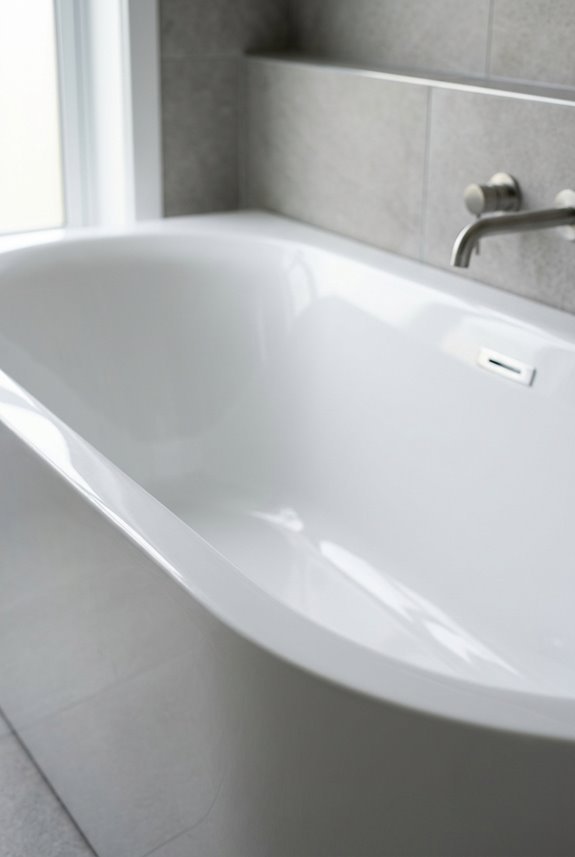
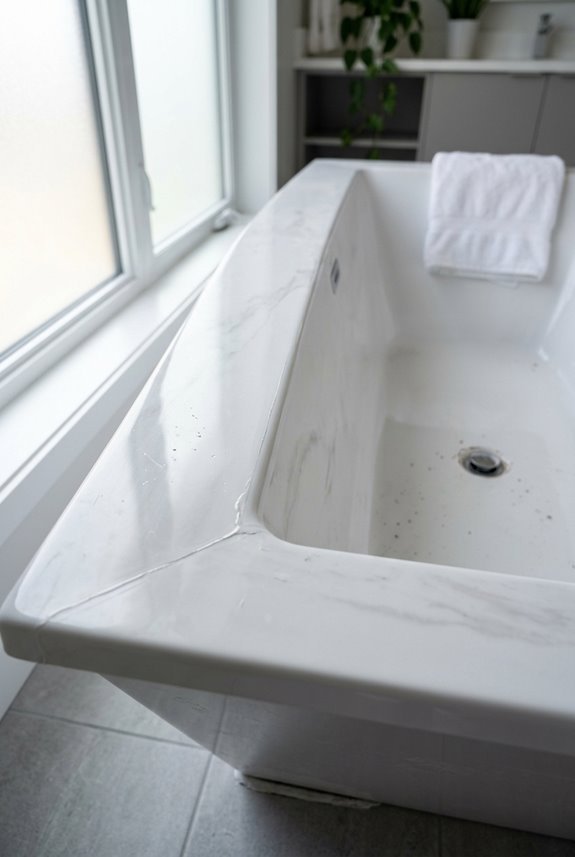
I’ll examine the surface closely for any visual imperfections, running my hand across it and checking under bright light for specks, dust, or air bubbles hiding beneath. You want to assess whether the gloss is deep and even all over. A quality finish should look lustrous without shiny spots in some areas and dull patches in others. This inspection reveals how well the tub will hold up to daily use and whether the finish will maintain its appearance over time.

3 Tier Countertop Corner Shelf: The 3 tier counter corner organizer shelf is made in 100% high grade acrylic material. Crystal clear or white, 5mm thickness. Very sturdy and durable for your house. Sezanrpt offer 2 size for the corner shelf: 7x7x15.7 inch and 9.5x9.5x15.7 inch. Or 2 tier design. You can choose your favirote size for your counter. Non-toxic, safe design, moisture-proof and anti-slip. Perfect for your bathroom or kitchen.

3 Tier Countertop Corner Shelf: The 3 tier counter corner organizer shelf is made in 100% high grade acrylic material. Crystal clear or white, 5mm thickness. Very sturdy and durable for your house. Sezanrpt offer 2 size for the corner shelf: 7x7x15.7 inch and 9.5x9.5x15.7 inch. Or 2 tier design. You can choose your favirote size for your counter. Non-toxic, safe design, moisture-proof and anti-slip. Perfect for your bathroom or kitchen.

This product has a strong soft rubber on the back, which is suitable for rough doors and walls.
Visual Imperfection Detection Methods
How closely do you look at a bathtub before deciding it’s the right one? Visual imperfection detection is essential when inspecting your acrylic tub. I shine a strong light across the entire surface, searching for bumps, ripples, specks, or dust inclusions hiding beneath. I check color uniformity carefully. Darker or lighter patches signal quality issues. The gloss level tells me a lot too. A deep, lustrous finish indicates superior coating, while dull or hazy areas suggest manufacturing flaws. I run my hand across the surface slowly, feeling for rough patches or texture variations. Even small air bubbles beneath the surface matter. By examining these details thoroughly, you can identify surface defects that affect durability and appearance before making your purchase.
Gloss Depth and Uniformity Assessment
When you’re standing in front of an acrylic bathtub, one of the quickest tells of quality is the “gloss test.” I look for a lustrous, uniform finish across the entire acrylic surface with no dull spots interrupting the shine. This gloss depth matters because it reveals how well the finish quality holds up.
I inspect from multiple angles under strong light, watching how the surface reflects light evenly. Any darker or lighter patches signal color inconsistency or thinning. I’ll probe gently in hidden areas to check scratch resistance. Premium tubs resist minor abrasions without visible damage. When the finish maintains consistent light reflection from rim to base, that acrylic surface will perform reliably for years.
Confirm Heat Retention and Ergonomic Comfort
Why does your bathwater stay warm so much longer in an acrylic tub? The answer lies in acrylic’s natural insulating properties. Thick acrylic acts as a genuine heat barrier, keeping your bathwater comfortable throughout your soak duration. The material’s pleasant surface temperature feels welcoming from the moment you step in.
Beyond warmth, acrylic tubs deliver exceptional ergonomic comfort. Gentle curves and sloped backs support your body naturally. Integrated armrests cradle your arms without strain, making extended soaks genuinely relaxing rather than uncomfortable.
Real-world factors matter though. Your room temperature, airflow, and how deep you fill the tub all influence your soak experience. When you combine acrylic’s inherent insulation with foam backing or air gaps, the heat retention improves noticeably. This combination of materials makes acrylic bathtubs stand out for both durability and everyday comfort.

60 IN. X 34 IN. SHOWER BASE WITH RIGHT SIDE DRAIN: Rectangular layout with right-positioned drain for efficient water flow and offset plumbing configurations 3-WALL FLANGES...
Examine Drain Seals and Overflow Connections
While acrylic’s comfort features make for genuinely relaxing soaks, drainage and overflow systems determine whether your investment stays watertight or becomes a costly problem.
During inspection, I examine:
- Metal stoppers and flanges made from brass or stainless steel, which resist corrosion better than cheaper alternatives
- High-quality gaskets that create reliable seals between connections, preventing leaks that damage cabinets below
- Overflow covers that sit flush and secure to the drainpipe, eliminating gaps where water escapes
- Multiple water pressure tests confirming the entire assembly maintains integrity under actual use conditions
I request underside photos to verify construction quality. This testing reveals whether drainage components will perform reliably or fail after months of regular use.

Maximizes unused corner space by fitting snugly into 90-degree angles for stable storage of bottles and toiletries.

[GRACEFUL DESIGN] Our freestanding tub has simple serenity, classic oval design with soft curves throughout. Ergonomic, tilted lumbar support and toe tap drainage for ease and comfort. Double-walled, fiberglass insulation for longer warm baths.

✅ Superior Heat Performance: Designed with thick solid walls to retain warmth longer for a relaxing soak. The rim, walls, and base stay warm, while the spacious 71-gallon capacity allows deep, shoulder-high immersion.
Choose Acrylic With UV and Scratch Protection
When you’re evaluating acrylic bathtubs, pay close attention to UV inhibitors in the material. These protect your tub from yellowing and fading, especially if your bathroom gets natural sunlight. You’ll also want to look for a scratch-resistant surface finish, which means checking that the acrylic has reinforced fiberglass backing and a smooth, high-gloss top layer that can handle the wear and tear of daily use. Examine the tub under bright light to spot any surface imperfections, bubbles, or specks that might signal lower quality and faster degradation over time.

✅ [DIMENSIONS AND SPECIFICATIONS]: Exterior dimensions: 71" Length x 31-1/2" Width x 28-3/8" Height;Internal dimensions: 45-1/4"Length x 19-5/8" Width; Water Depth to Overflow: 14-1/8" Deep. – Effective Tub Capacity: 68 Gallons.

✅ [DIMENSIONS AND SPECIFICATIONS]: Exterior Dimension: 67" Long x 31-1/2" Wide x 31-1/2" Deep – Effective Tub Capacity: 57 Gallons; Seating Dimension: 44" Length x 21-5/8" Width, Water Depth to Overflow: 14-1/8"

✅ [DIMENSIONS AND SPECIFICATIONS]: Exterior Dimension: 67" Long x 31 1/2" Wide x 22 4/5" Deep – Effective Tub Capacity: 74 Gallons
UV Inhibitors Prevent Yellowing
How much does sunlight really affect your bathtub’s appearance? UV rays gradually fade and yellow acrylic over time, but you can prevent this damage.
- Look for acrylic with UV inhibitors built into the material itself
- Choose UV-stabilized formulations that resist color shift from bathroom lighting
- Select UV-protected acrylic to maintain long-term gloss and surface integrity
- Verify acrylic durability by checking manufacturer specifications for UV resistance
These UV inhibitors work like invisible shields, stopping yellowing before it starts. When you invest in bathroom acrylic with proper UV stabilization, you protect your bathtub’s clarity and appearance for years ahead. Quality acrylic with these features keeps your tub beautiful through countless showers and baths.
Scratch-Resistant Surface Finishes
Beyond protecting your tub from yellowing, you’ll also want a surface that resists the daily wear and tear of bathing. A quality acrylic surface finish makes a significant difference. Look for scratch resistance built into the resin backing and reinforced acrylic layers underneath. You want a non-porous surface that stays uniformly glossy and smooth, resisting those minor scratches from soap bottles and razors. Check the tub under strong light for evenness; no specks or dull patches should appear. When you’re shopping, don’t skip the warranty coverage. The best tubs explicitly guarantee their acrylic surface finish against fading, scratches, and haze. This protection ensures your investment will maintain its appearance for years to come.
Verify ASME and IAPMO Certifications
Since you’re investing in a quality acrylic bathtub, check for two key certifications that prove a tub has met rigorous safety and durability standards: ASME A112.19.7/CSA B45.10 and IAPMO Z124.
- Look for certification labels directly on the product or in manufacturer specifications
- Verify independent testing by recognized bodies, not just company claims
- Request documentation showing test reports supporting these certifications
- Examine QC processes that manufacturers openly share with customers
Transparent brands display these certifications prominently because they’ve invested in rigorous testing. Request explicit proof of adherence to industry standards from manufacturers. When you see these certifications, you’re selecting a bathtub with documented durability and verified safety compliance.

SIZE:Classic round shape 9 inch(24cm), Thickness: 5 mm

1pcs 5mm 3D Acrylic Mirror Round Toilet Door Sign Men Women Bathroom Toilet Black Gold Silver Modern Wooden Base Wall Sticker Home Decor

[Premium Material Construction] Made from crystal-clear, high-quality acrylic, this bathtub tray features an 8mm-thick main board and 5mm-thick side barriers exceptional durability. The smooth surface and rounded edges provide a safe, comfortable, and luxurious user experience.
Budget for Maintenance, Repairs, and Your Installation
What determines whether your acrylic bathtub investment pays off isn’t just the upfront cost. It’s what you’ll spend keeping it in great shape and getting it properly installed.
Installation costs often rival the tub itself, especially when subfloor prep is involved. Quality acrylic tubs with reinforced backing last 10-20+ years, but that lifespan depends on your maintenance budget and cleaning habits.
| Cost Factor | Your Budget | Impact |
|---|---|---|
| Installation labor | $500–$2,000+ | Determines stability |
| Annual maintenance | $50–$150 | Prevents yellowing |
| Repairs (if needed) | $200–$1,500 | Extends lifespan |
Clean acrylic tubs with non-abrasive products monthly to protect the surface. Minor scratches need polishing; serious damage requires repair kits or professionals. Check warranties offering 5-10 years coverage. Manufacturer warranties indicate confidence in durability and protect your investment over time.