
Your above-ground pool fence must meet federal baselines: prevent a 4-inch sphere from passing through, maintain bottom clearance under 4 inches, and include self-closing gates that latch securely.
Most jurisdictions require 48-inch minimum height with 4-inch vertical spacing.
Your local building department sets specific rules for your area.
You’ll need permits before filling and must pass inspections.
Skipping this process results in fines up to $1,000 daily and voids insurance claims.
Meeting these requirements protects your property and ensures legal compliance.
Does Your Above-Ground Pool Need a Fence?
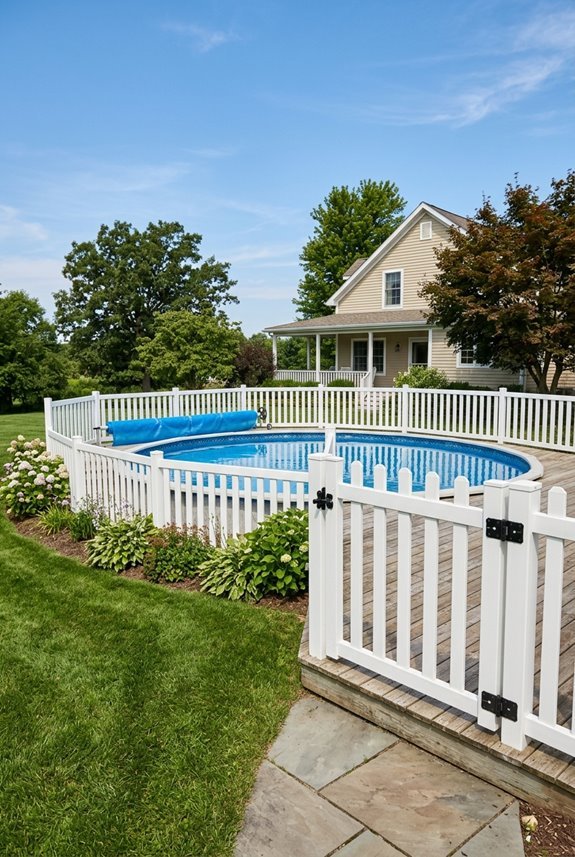
Why would an above-ground pool need a fence when it’s already sitting several feet off the ground? Safety regulations exist to protect children and prevent accidents. In most jurisdictions, if your pool holds water deeper than 24 inches, you’ll likely need a fence. Local regulations vary, so you’ll want to check with your building department first. Most areas require a minimum fence height of 48 inches with a self-closing gate that latches automatically. These requirements aren’t just suggestions; they’re legal standards designed to control access. Your fence serves as a barrier that keeps unsupervised visitors out. Meeting these codes protects your family and ensures compliance with local safety laws while you enjoy your pool.

Pool Safety Fence: The premium above-ground pool safety fence is crafted from high-quality materials to prevent accidental drowning. This essential safety feature is ideal...
Federal Fence Compliance Baselines From the CPSC
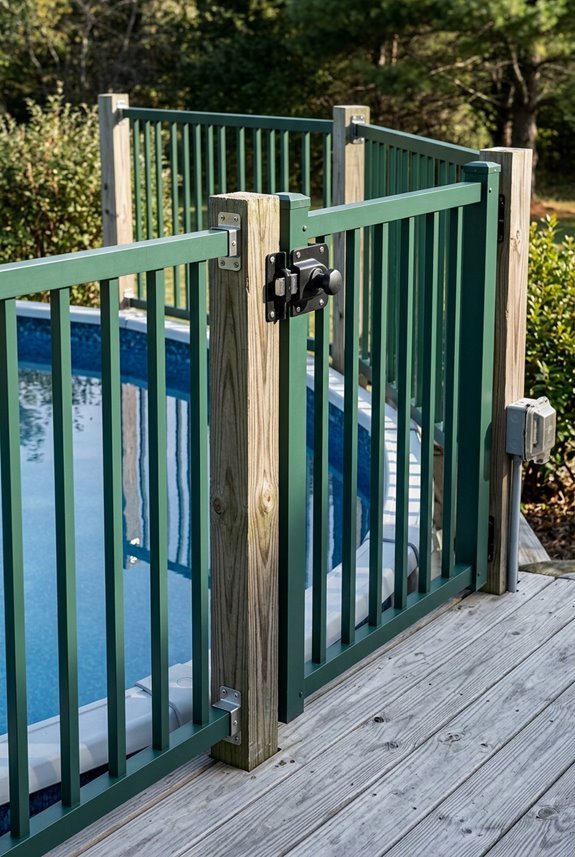
Federal pool fence standards from the CPSC establish barrier requirements that protect children from unsupervised pool access. The key requirements are:
Barrier openings must be small enough that a four-inch diameter sphere cannot pass through. This prevents small children from squeezing through gaps. Self-closing gates must close automatically and latch securely to prevent unauthorized entry. Bottom clearance should not exceed four inches to prevent crawling access.
These federal baselines create a safety foundation. Exceeding these minimum standards provides additional protection beyond what federal law requires.
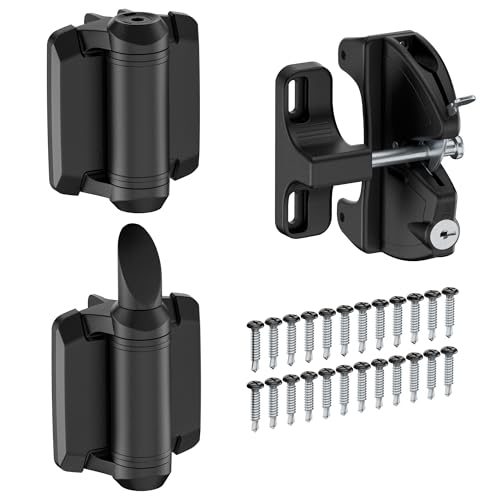
【Double Sided Open & Key-lockable】Gate door lock for general-purpose gates around the home, built-in key lock that no need for a extra padlock or pins, makes gate easy to be opened in both directions, great for replacement privacy security gate latch.

KIT INCLUDES 4 PRODUCTS - (1) MagnaLatch, (2) TruClose Gate Hinges, (1) TruClose Safety Cap and (1) Gate Gap Spacer. For square gate frame and square fence post metal, vinyl, wood gates.

SELF-LATCHING DESIGN: This heavy duty latch can make the door closed easily with a slightly push. On the other side, press the fingertips lightly to open the door smoothly. A pad lock can be used for adding security, and the hole diameter is up to 0.3".
Check Your Local Compliance Requirements
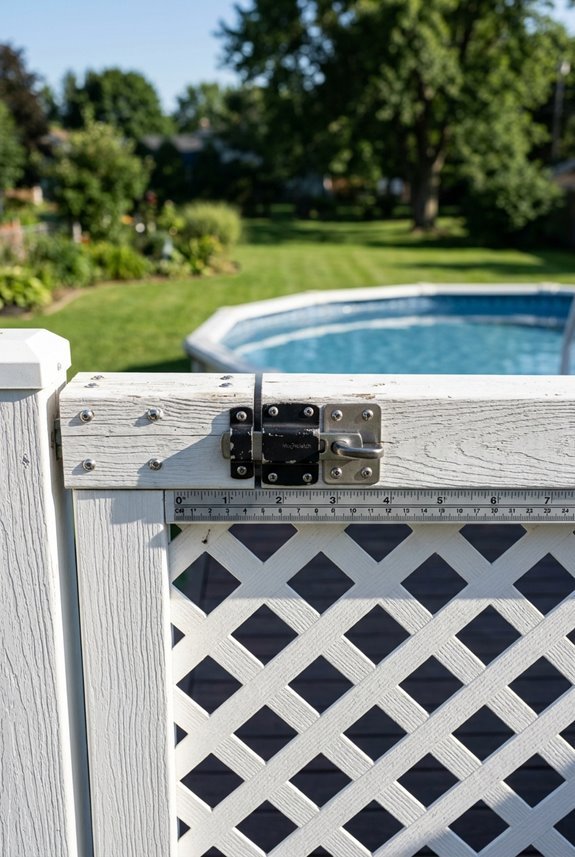
How much detail do your local rules actually require? Municipal building departments hold the answers. Your city or county might demand fencing permits with specific plans, detailed pool gate requirements like self-closing mechanisms, or ground clearance limits around 2 inches maximum. Many areas require a 48-inch residential barrier with self-latching gates. Call your local building department early because requirements vary significantly by location. Some jurisdictions tie inspections to pool filling, meaning inspectors won’t allow you to add water until everything’s approved. Beyond state baselines, local ordinances and HOA covenants can add extra demands. Skipping this step results in costly stop-work orders or fines.

Pool Safety Fence for Above-Ground Pools: This pool safety fence creates a protective barrier that helps deter unsupervised pool access by pets and family members

Removable, mesh, pool safety fencing for use around swimming pools to help protect against accidental falls into the pool.

POOL SAFETY KIT - Help to keep your outdoor above ground swimming pool safe with this 24" vinyl safety fence. Helps fight off the risk of accidental pool drownings with this pool barrier.
Compliance Standards for Fence Height and Materials
When you’re building your pool fence, the measurements and materials you choose are legal compliance requirements that protect children and satisfy inspectors. Getting these details right is essential for your pool’s safety and regulatory approval.
Your fence height and materials must meet specific compliance standards:
- Maintain a minimum fence height of 48 inches, though some jurisdictions require 60 inches
- Keep bottom clearance at 2 inches maximum, or 4 inches if mounted on above-ground structures
- Limit vertical picket spacing to 4 inches to prevent climbing
- Choose durable materials like vinyl, ornamental aluminum, or chain link with privacy slats
These compliance standards work together to create an effective barrier. Check your local codes first since requirements vary by region.
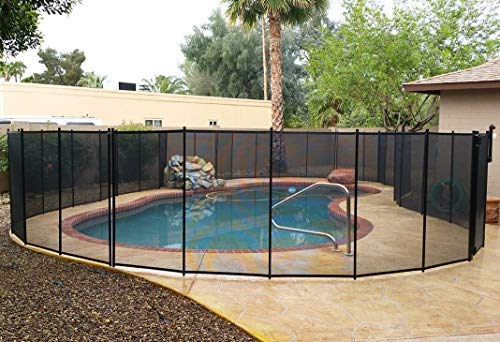

For use with the Pool Fence DIY backyard pool safety system from Life Saver

ArrogantF Sleeve and Cap Set for Pool Safety Fence Poles,Can Be Used with Concrete, Pavers, Deck, Ground,For use with the Pool Fence DIY backyard pool safety system from Life Saver or any standard safety fence with ½ inch stainless steel pins.
Gate Compliance Requirements
Your gate is where your pool fence’s security comes together. Install gates that are self-closing and self-latching, meaning they shut and lock automatically. These gates must open outward, away from the pool, to prevent unauthorized entry.
The latch placement matters. If it’s 54 inches or higher, you can put it on either side. If it’s lower, you must place it on the pool side, at least 3 inches from the top. Openings near the latch must stay smaller than half an inch within 18 inches of it. Test your gate’s hardware monthly to ensure everything works properly.

Vibrant colors: High quality, high resolution color printed aluminum signs. Printed with striking colors that makes the sign visible from a distance. Thicker than competitor:...
Using Pool Walls, Your Deck, or Your House as Your Fence
A common misconception: your pool’s walls, your existing deck, or your house itself cannot always substitute for a proper fence. Many homeowners think they’ve found a shortcut, but codes are stricter than expected.
What actually matters:
- A 48-inch pool wall only works if you control access completely; this means removable or lockable ladders
- Your deck typically invalidates the wall as a standalone barrier, requiring isolation fencing instead
- Using your house as a barrier still demands doors meet opening restrictions and often need alarms
- Permanent ladders or deck connections trigger separate isolation fencing requirements around your pool area
Your municipality has final say on what counts. Always verify locally before assuming your existing structures meet compliance requirements.

【Above Ground Pool Ladder 】This ladder is perfect for use in above-ground swimming pools. Our ladder features double-sided steps,with a non-slip design feet ,sturdy armrests on both sides,to ensure swimmers can enter the pool easily and safely even when the surface is wet.

POOL SAFETY KIT - Help to keep your outdoor above ground swimming pool safe with this 24" vinyl safety fence. Helps fight off the risk of accidental pool drownings with this pool barrier.

Climb in and out of your pool with this above-ground pool ladder designed with the safety and comfort of you and your fellow swimmers in mind
Get Your Permit and Pass Inspection
Before you fill that pool with water, you’ll need to get a permit and pass a local inspection. This step is critical for pool safety and legal compliance. I start by contacting my local building department to request the permits required for above-ground pools, typically costing around $50. I submit detailed fencing plans showing my barrier meets the critical 48-inch minimum height with proper spacing. The inspection happens before I add any water. The inspector verifies my fence openings don’t exceed 4 inches and my ground clearance stays under 2 inches. Once I pass, I’m cleared to proceed. Skip this, and I risk stop-work orders, daily fines, and voided insurance coverage. Getting it right protects my family and investment.

MAGNETIC GATE LATCH: Self-closing magnetic technology automatically secures your pool gate every time, providing reliable childproof protection that meets ASTM F1346 safety standards for peace of mind around water

Premium protection: This yard fences lock is for inward and outward swinging wood or metal doors. Its thick steel construction uses gravity locking to provide true safety for dogs, pets, and babies, by preventing predators from getting into your garden.

Easy-to-install, do-it-yourself gate kit for use with the Pool Fence DIY safety system; helps keep kids safe from accidental falls into your pool
Mistakes to Avoid (and the Fines They Cost)
Even after passing inspection and receiving a permit, violations are easy to incur, and that’s when serious problems begin. Massachusetts enforces strict pool safety requirements, with violations resulting in significant fines. Watch for these common issues:
- Gaps larger than 4 inches in barriers
- Gates that don’t self-close or self-latch properly
- Footholds or climbing features near the fence
- Non-removable ladders or decks without isolation fencing
Each violation can trigger fines up to $1,000 per occurrence for public pools. Residential installations face stop-work orders until corrections are completed. Inspectors identify overlooked details consistently. Maintaining compliance protects your investment and ensures safety for all users.
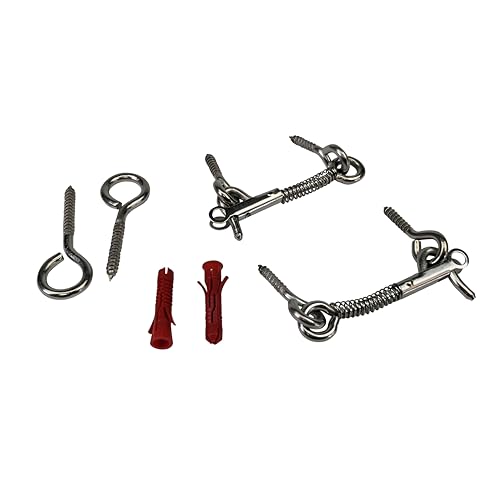
Secure Wall Mount System—Designed for pool fences for inground pools, this pool child safety fence wall mount creates a strong fence to wall anchor that stabilizes fence ends against brick, stucco, block, or wood walls for maximum safety.

POOL SAFETY FENCE SECTION – Protects against unauthorized access to your pool, keeping your loved ones safe. Sturdy & extremely safe while in use, it’s easy to remove. Must be installed on cement or concrete decks. NOT recommended for use with pavers. This product may not be compatible with other brands of fencing and should only be used with WaterWarden four-foot-high Pool Safety Fence and Gate Systems.

Complete Mesh Pool Fencing Solution—This premium mesh fabric features a durable sewn border and can be used for both new pool fence installations and section repairs. It provides a strong, reliable safety barrier around inground pools and meets standard mesh fencing requirements.
Protect Yourself With the Right Insurance
Your homeowner’s insurance carrier will examine whether your fence meets the 48-inch height standard with self-closing gates. If it doesn’t, they might deny claims, raise your premiums, or even cancel your policy after an incident. Managing this liability risk requires staying compliant with local codes and keeping documentation like permits and inspection records available. This protects you both legally and financially when you need your insurance coverage.

Pool Safety Fence: The premium above-ground pool safety fence is crafted from high-quality materials to prevent accidental drowning. This essential safety feature is ideal for keeping children and pets secure around your pool area.

Easy DIY Installation: Design your own pool layout according to your needs, then use a measuring ruler to confirm the holes and drill to complete the installation. Note: The 5/8'' drill bit is needed to drill holes
Insurance Coverage Requirements
Your homeowner’s insurance policy likely depends on your pool’s compliance with safety standards. Verify directly with your carrier before installation. Insurers prioritize the following:
- Fence height and material specifications matching local codes
- Gate self-closing and self-latching mechanisms
- Complete perimeter barriers with no gaps exceeding four inches
- Documented professional installation records
Non-compliance creates serious consequences. Your insurer might increase premiums, exclude pool-related claims, or cancel your policy entirely. Even if local enforcement seems relaxed, insurers enforce strict safety standards because they’re protecting their liability exposure and yours.
Professional installation and compliance documentation ensure you satisfy your insurer’s expectations and maintain full coverage when accidents occur.
Liability Risk Management
What happens when a neighbor’s child sneaks through your pool gate and gets hurt? You’re facing serious liability risk management concerns. Fencing compliance isn’t optional; it’s your financial protection.
A properly installed residential pool safety fence with a 48-inch height, self-closing gates, and openings no larger than 4 inches creates a legal barrier. This setup demonstrates you’ve taken reasonable precautions, which matters in court if an incident occurs.
Courts recognize that adequate fencing plus supervision reduces drowning likelihood. Insurance carriers understand this too. They’ll likely deny claims on non-compliant pools, leaving you personally responsible for medical bills and legal fees.
Your fence protects your family and your finances. It’s the foundation of liability risk management that holds up in court.
Keep Your Fence Safe and Pass Re-Inspections
I’ll walk you through keeping your fence compliant with regular inspections and maintenance that fit your schedule. You’ll need to inspect your fence monthly for basic issues like loose boards and gate latch function, then follow material-specific upkeep routines. Wood fences need rot checks, while metal ones need rust prevention. Staying on top of these tasks now saves you from costly fines and liability problems down the road.
Annual Inspection And Maintenance
How often should you actually check your pool fence? Regular maintenance keeps your family safe and helps you pass inspections.
What to do regularly:
- Perform annual fence inspections, checking for rot, loose boards, and gaps exceeding code
- Test gate mechanisms monthly to ensure self-closing and self-latching work properly
- Verify latch height stays at 54 inches with openings under ½ inch
- Inspect ground clearance, keeping it under 2 inches to prevent crawl-through access
You should also remove climbable elements within 36 inches of the barrier. Maintain a detailed safety log documenting every inspection date, repair, and concern. This record protects you legally and demonstrates that you’re taking fence inspection and gate maintenance seriously. Consistent upkeep prevents costly problems later.
Material-Specific Upkeep Schedules
Your regular inspection schedule works great for spotting problems, but different fence materials need their own care plans to stay safe and compliant. Wooden fences require the most attention. I perform staining, sealing, or paint touch-ups every 2–3 years to prevent rot and maintain structural integrity. I check gate hardware annually, lubricating hinges and mechanisms to ensure self-closing and self-latching functionality work properly. Metal fences need less frequent upkeep but still require rust inspections. Whatever your material, document all fence maintenance activities and maintain compliance records showing when work was completed. This documentation proves to inspectors that you’re meeting legal requirements and helps you pass re-inspections with confidence.
Out of Compliance? Here’s Your Correction Timeline and Costs
When your pool fence doesn’t meet local codes, time becomes your enemy. What happens next and what it costs requires immediate attention.
You’ve got 30 to 60 days to fix things after receiving notification. Correction typically involves:
- Installing self-closing gates at the required fence height (usually 54 inches or higher)
- Sealing gaps to no more than 4 inches
- Reducing bottom clearance to code standards
- Replacing gate hardware if needed
Costs range from a few hundred to several thousand dollars depending on your situation. Fines and penalties can reach $1,000 per violation daily until you comply. Skip correction entirely, and you’re facing denied insurance coverage and serious liability if someone gets hurt. Compliance requires immediate action.