

Your air mattress likely deflates from temperature drops at night, which shrinks the air inside, or from a slow leak at the valve, seams, or edges. Test this by applying soapy water to find bubbles that pinpoint leaks, then patch small holes with a repair kit or replace the valve if needed. New mattresses also settle for two weeks, feeling softer temporarily. If problems persist despite these fixes, replacement becomes necessary for reliable sleep.
Why Air Mattresses Deflate Overnight: Main Causes
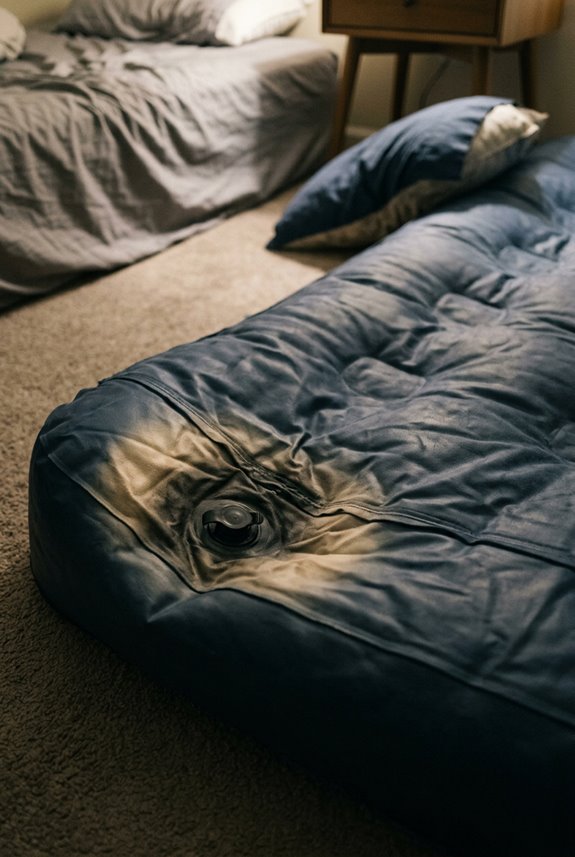
Have you ever woken up to find your air mattress noticeably softer than when you went to bed? I’ve been there, and I’ve discovered several reasons why your air mattress deflates overnight.
Temperature drops are often the culprit. When your room cools at night, the air inside contracts, making your mattress feel softer even without an actual leak. New mattresses naturally stretch as they adapt to your weight and body heat during early use, causing gradual pressure drops that aren’t real leaks.
Internal beam structures settle with movement, temporarily reducing firmness. Slow leaks at seams, valve bases, or edges cause genuine overnight deflation you can’t immediately see. Moisture and humidity also affect air pressure, making detection tricky. Identifying whether you’re dealing with a real problem or normal mattress behavior requires understanding these distinct causes.
Diagnose the Problem: Is It a Leak or Physics?
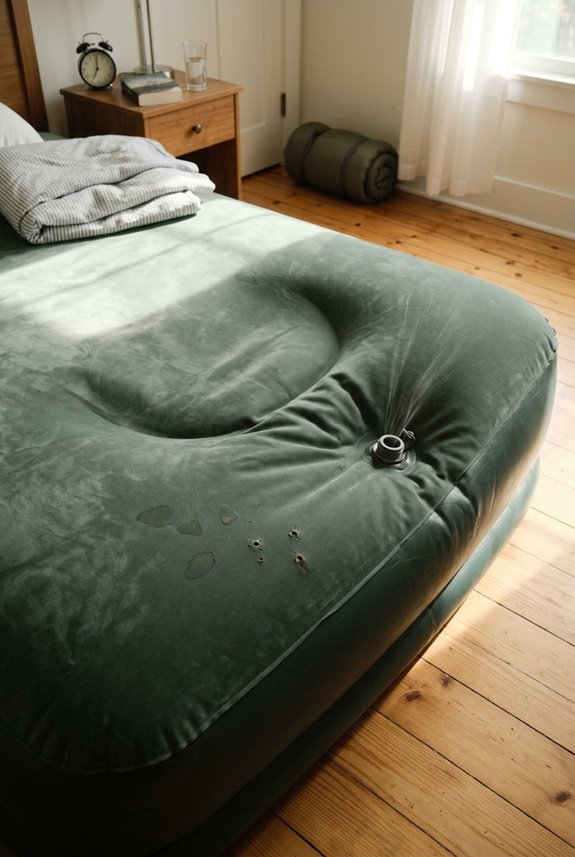
Before you start patching holes, figure out what’s actually happening to your mattress. Not every overnight deflation means you’ve got an air leak. Temperature changes cause air to contract at night, making your mattress feel softer without losing actual pressure. New materials stretch and settle with body heat, creating a temporary drop that’s normal during initial use.
| Symptom | Likely Cause | Next Step |
|---|---|---|
| Slow loss over days | Air leak | Test with soap bubbles |
| Softer feel at dawn | Temperature drop | Check pressure when warm |
| Initial settling period | Material adjustment | Monitor for two weeks |
To confirm an actual air leak, grab soapy water and check your valves and seams carefully. Microscopic punctures hide easily, so patience is essential.
Find Leaks With the Soapy Water Test

Once you’ve ruled out temperature changes, it’s time to hunt for the actual leak. The soapy water test is straightforward and effective. First, fully inflate your mattress. Then mix dish soap with water in a spray bottle or bowl. Apply this soapy water solution to suspected areas like the valve base, seams, and edges. Watch carefully for bubbles forming continuously. Those bubbles indicate air leaks escaping from your mattress. If you spot bubbles around the valve, you’re likely looking at valve repair rather than a simple patch job. For small holes elsewhere, you’ll want to mark the spot and prepare for patching. This test takes just minutes and identifies the exact location of the problem.
Check Your Air Valve for Dirt or Blockages
Where’s the air actually going? The valve itself is often the culprit behind overnight air leakage. Dirt or debris can block your valve seal, preventing it from closing completely and creating a slow escape route for air.
Clean the valve area with a damp cloth, removing any particles that might be interfering with the seal. Sometimes a valve blockage is so small you won’t notice it without looking closely.
Also check that the outer cap sits properly and that nothing’s misaligned. If you still detect air leakage after cleaning, reseal the valve firmly. This simple maintenance restores the airtight closure you need. Your mattress should stay firm through the night once you’ve cleared those blockages.
Patch Small Holes With the Repair Kit
Once you’ve pinpointed where your mattress is leaking, locate the hole using soapy water. Mix it with water and look for bubbles around seams, valve bases, and edges where leaks commonly hide. After you’ve found the leak and cleaned the area thoroughly, apply the glue, press your patch down firmly for 30 seconds, then re-inflate and wait about an hour to see if the leak has stopped.
Locating Holes With Soapy Water
The hunt for a leak requires patience and a simple tool: soapy water. I inflate my mattress fully, then mix dish soap with water in a spray bottle. I spray suspected areas (seams, edges, the valve base, and the surface) while watching carefully for persistent bubbles. Those bubbles show exactly where air is escaping.
Locating leaks this way beats guessing. Some punctures are tiny, almost microscopic, so I take my time spraying methodically. If I don’t spot anything obvious, I repeat the process.
Once I’ve found the leak, I dry the area completely. Then I’m ready for patching repair with my kit. Using the soapy water method prevents wasting patches on incorrect spots.
Applying The Patch Correctly
After you’ve spotted that leak with soapy water, you’re ready to seal it up with your repair kit. First, clean the area around the hole thoroughly and let it dry completely. Dust and moisture prevent good adhesion, so this step is critical.
Next, apply the glue from the patch kit directly onto the mattress surface. Press the patch firmly onto the spot and hold it for about 30 seconds. This pressure helps the adhesive bond properly to the material.
Then comes the waiting period. Let the patch cure for roughly an hour before inflating the mattress again. Once it’s full, use soapy water one more time to confirm the leaks are sealed. This process restores your mattress so you can sleep soundly.
Reinflation After Repair Time
How long should you wait before actually using your air mattress again? After you’ve applied your patch, patience becomes necessary in preventing future deflation. Wait about an hour for the adhesive to cure completely. Once that time passes, re-inflate the mattress fully to restore its firmness.
| Step | Action | Time | Result |
|---|---|---|---|
| 1 | Apply patch firmly | 30 seconds | Secure seal |
| 2 | Wait for curing | 60 minutes | Adhesive sets |
| 3 | Re-inflate mattress | 10-15 minutes | Full firmness |
| 4 | Test overnight | 8+ hours | Confirms fix |
After reinflating, observe whether your air mattress holds air throughout the night. If deflation continues, recheck the patched area and consider applying another patch. This methodical approach ensures your mattress stays properly inflated and identifies whether the repair was successful.
Repair or Replace a Faulty Valve
Pinpoint the valve as your culprit by running a simple water-and-Dawn test around the valve area. If you spot bubbles forming, you’ve found your leak. A valve leak often means you’re dealing with improper sealing, dirt buildup, or wear around the valve seam.
Standard patch kits usually won’t cut it for valve repair. You’ll likely need to replace the valve module itself or pursue professional valve repair services. Before assuming the worst, check whether your outer cap is fully closed and aligned properly. A loose or misaligned cap causes slow air mattress deflation overnight without any actual damage.
If that doesn’t solve your air mattress deflation problem, replacement becomes your best option for lasting results.
Temperature Drops and Nighttime Air Loss
Why does your air mattress feel softer when you wake up, even though you didn’t notice any actual leak? The culprit is temperature. When nighttime falls and your room cools down, the air inside your mattress contracts. This cooling reduces air pressure, making your bed feel deflated by morning, even if no air has actually escaped.
| Temperature Change | Air Pressure Effect | What You’ll Notice |
|---|---|---|
| Room cools 10°F | Pressure drops noticeably | Mattress feels softer |
| Room stays warm | Pressure stays stable | Firmness remains consistent |
| Morning sun rises | Air warms and re-expands | Mattress feels firmer again |
| Cold bedroom overnight | Maximum pressure loss | Significant overnight deflation |
The difference between internal and external temperatures accelerates this overnight deflation. Keeping your sleeping area warmer or using an electric pump maintains steadier air pressure throughout the night.
New Material Stretching During Initial Use
Beyond temperature fluctuations, there’s another reason your brand-new air mattress might feel softer after a night or two of use. It has nothing to do with leaks. When you first inflate your mattress, the PVC or TPU material needs time to settle. During initial stretch, the internal structures like I-beams gradually adjust to your body’s weight and heat. This bedding inflation process causes air pressure to shift naturally as materials loosen slightly at seams. Rather than a true deflation, you’re witnessing your mattress adapting. Allow several hours, or even overnight, before judging whether your mattress is stable. Give those materials patience to bed in properly, and you’ll notice the pressure stabilizes once everything settles into place.
Uneven Weight Distribution and Beam Stress
How you position yourself on an air mattress significantly affects its longevity. When you concentrate weight unevenly, you create beam stress that causes internal support structures to bow and shift. This uneven pressure leads to a softer center and firmer edges.
Weight distribution problems cause these specific issues:
- Leaning on edges stresses horizontal beams, accelerating sagging and air leaks
- Jumping or kneeling intensifies beam distortion across the mattress
- Two people pressing near seams concentrates force, requiring more air to maintain comfort
Spreading your weight evenly prevents these issues. Avoid bouncing on the mattress, and if you’re sharing a bed, position yourselves toward the center. Using protective underlayers like blankets or foam tiles also reduces friction that stresses beams during movement. These adjustments maintain mattress firmness and reduce structural damage over time.
How Humidity and Moisture Affect Pressure
When you’re sleeping on an air mattress in a damp room, you’re dealing with an invisible problem that’s harder to spot than a slow leak. Humidity and moisture actually change how air behaves inside your mattress. Water vapor makes the air less dense, which drops your air pressure without any actual deflation happening. Moist air compresses faster than dry air, causing noticeable softness overnight. Humid environments make everything feel softer and colder, tricking you into thinking your mattress has deflated when it technically hasn’t. To prevent this, keep your mattress away from moisture sources and let the surface dry completely. Using an electric pump helps maintain consistent pressure throughout the night.
Ground Surface Problems and How to Prevent Them
Why does the ground matter so much when you’re just laying on top of it? Your ground surface directly impacts how quickly your air mattress deflates overnight. Rough terrain creates friction and stress on your mattress, causing micro-tears at seams and edges that you won’t even notice at first.
Protection underneath makes all the difference. What I recommend:
- Place a rug, blanket, or foam tiles under your mattress
- Use a tarp to shield against sharp rocks and rough surfaces
- Smooth and elevate your setup area before inflating
Cold, hard surfaces like concrete or gravel accelerate air loss and create that frustrating soft feel by morning. Proper weight distribution prevents center sinking and edge damage. Taking time to prepare your ground surface prevents unnecessary deflation and extends your mattress’s lifespan by months or years.
Protect Your Mattress From Below
The ground beneath your air mattress is just as important as the mattress itself regarding preventing overnight deflation. Direct contact with rough surfaces causes underside abrasion, leading to slow leaks you might not notice immediately. Place a rug, blanket, foam tiles, or tarp between your mattress and the ground. This distributes your weight evenly and reduces friction from rocks, debris, or uneven terrain. Even small pebbles can create micro-tears over time. When you elevate your mattress slightly with padding, you create a barrier against ground surface damage. These steps keep your mattress intact and prevent the midnight deflations that disrupt sleep.
Keep Your Mattress Firm All Night
If you’re tired of waking up to a saggy mattress, keeping your air mattress plugged into a dual-pump system overnight maintains steady pressure while you sleep. This approach prevents the natural pressure drops that happen when temperature dips at night, so your bed stays consistently firm without you having to manually reinflate it every few hours. A dual-pump system provides the stable support needed throughout the night, eliminating sleep disruptions caused by sagging.
Dual Pump Technology Benefits
Since most air mattresses lose pressure gradually throughout the night, dual pump systems offer a smart solution to this frustrating problem.
- Continuous monitoring: The primary pump inflates your bed to the ideal setting while a secondary pump silently re-inflates as needed
- Automatic pressure correction: You won’t wake up to a sagging mattress because the system corrects losses without your intervention
- Intelligent cycling: Air cycles only when necessary, preventing over-inflation while maintaining stable firmness
These systems particularly help with beds featuring internal beam structures that settle during sleep. Some models even include USB ports for charging devices. When plugged in, dual pump technology keeps your mattress consistently firm all night through precise air pressure maintenance and internal beam stabilization. The mattress stays reliable without constant adjustment.
Overnight Pressure Maintenance
How can you keep your air mattress from going flat while you sleep? Investing in a dual pump system makes a significant difference. This pump monitors your mattress throughout the night and automatically re-inflates when pressure drops, so you won’t wake up sinking into the bed.
Before your first night, inflate to maximum pressure and wait at least 12 hours. This allows internal beam settlement, which stabilizes the mattress structure. During this stretch period, you’ll notice the materials shifting. This is normal and necessary.
Check your valve and seams carefully for air leaks. Even tiny gaps cause overnight pressure maintenance problems. Place your mattress on a protective, flat surface to reduce friction that accelerates deflation. These steps work together to keep you comfortable all night.
Break In Your Air Mattress Correctly
When you first inflate a brand-new air mattress, you’re really just beginning its adjustment period. New mattresses need time to settle before they perform their best. During break-in, materials like PVC and internal beams adapt to your body heat and weight, causing some deflation.
New air mattresses require a break-in period as PVC materials and internal components adapt to your body heat and weight.
Breaking in your mattress correctly involves these steps:
- Inflate it fully on a clean floor and let it sit for several hours without anyone on it
- Add air as needed before your first night of heavy sleeping
- Expect slight deflation during early uses as fibers rearrange and components loosen
After this initial adaptation period, your air mattress stabilizes significantly. You’ll notice pressure loss becomes much less noticeable. This adjustment phase typically lasts just a few uses and results in reliable, consistent performance.
When to Replace Your Air Mattress
Despite your best repair efforts, there comes a point where patching won’t cut it anymore. If you’re dealing with a persistent valve leak or seal failure that keeps happening despite your repairs, replacing your mattress makes sense. Repeated deflation in the same spot signals deeper structural problems you can’t fix with a patch kit.
When a valve leak returns after you’ve sealed it, or when multiple areas start failing simultaneously, replacement is necessary. Split-king beds with ongoing deflation on one side despite checking all internal connections need replacement too.
A mattress that won’t hold air for even a few hours has reached its limit. Investing in a new one eliminates constant troubleshooting and reduces ongoing maintenance costs.