
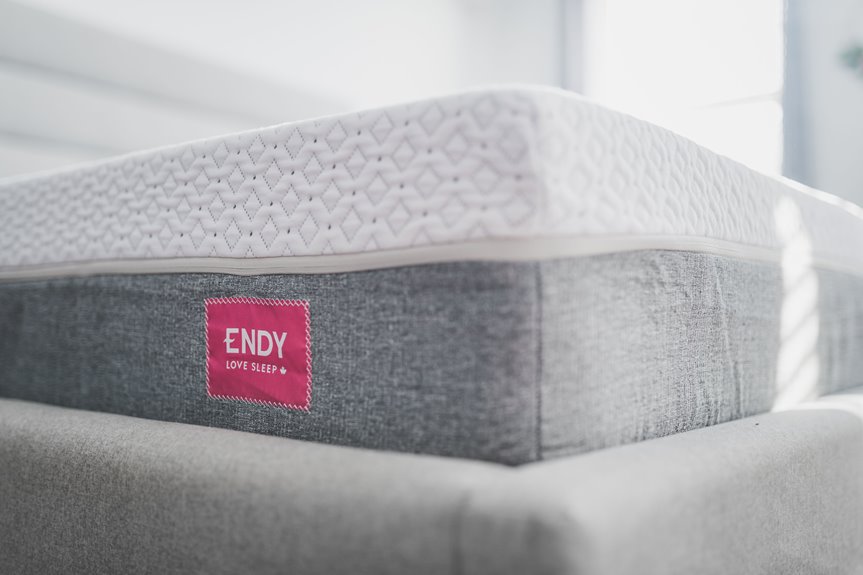
Memory foam mattresses help your back pain by contouring to your body’s curves while preventing mid-body sinking. Zoned support firms up under your hips and lower back where you need it most. Matching the right firmness to your sleep position and weight matters. Side sleepers under 230 pounds typically prefer medium-soft foam, while back sleepers benefit from medium-firm. High-density foam around 4.0 lbs/ft³ resists sagging, and a 2–4 week break-in period lets everything settle into place. Cooling features prevent heat buildup that shifts pressure points. These seven mechanisms work together to reduce morning stiffness.
Align Your Spine Without Mid-Body Sinking
How does your spine actually stay aligned when you’re lying down for eight hours? Memory foam works by contouring directly to your body’s natural curves. This contoured support prevents mid-body sinking, which is when your hips and lower back sag too deeply into the mattress.
When you choose proper support with zoned layers, you’re targeting the areas where you need it most. High-density foam, rated 4.0 lbs/ft³ or higher, resists premature indentation and keeps your spine in a neutral position night after night. Medium-firm to firm firmness levels work together to distribute your weight across shoulders, hips, and midsection.
Your mattress needs roughly 2–4 weeks to mold properly to you. Once it adjusts, pressure relief and spinal alignment improve measurably, and back pain typically decreases within this timeframe.
Reduce Pressure Point Buildup at Your Hips and Shoulders
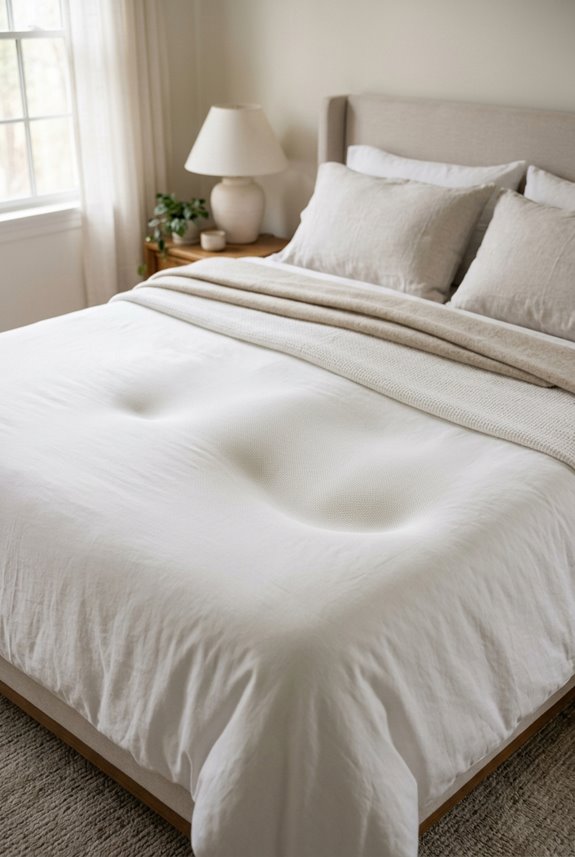
When you lie on a memory foam mattress, the foam molds around your body’s shape rather than pushing back against you. Your hips and shoulders, the heaviest parts of your upper body, sink into the foam in a way that spreads out your weight across a bigger surface area. This results in less concentrated pressure on those sensitive spots. This contouring action prevents you from waking up with sharp pain or numbness that occurs with mattresses that are too firm. The foam softens where you need it most while still supporting your spine’s natural curve.
Memory Foam Contouring Benefits
Why do your hips and shoulders take such a beating during sleep? These areas bear your weight’s full force night after night. Memory foam contouring addresses this problem by distributing pressure more effectively.
When you sink into contouring memory foam, it cradles your body instead of fighting it. The foam molds around your hips and shoulders, distributing pressure evenly rather than concentrating it in spots. This pressure relief keeps your spine aligned naturally.
| Feature | Benefit | Result |
|---|---|---|
| Memory foam contouring | Reduces concentrated pressure | Less morning pain |
| Zoned support | Firmer midsection, lighter ends | Better spinal alignment |
| Gel-infused foam | Improved breathability | Sustained comfort |
| Motion isolation | Minimizes movement transfer | Consistent support |
| High-pressure targeting | Dense layers where needed | Targeted relief |
Open-cell and gel-infused options keep you cool while maintaining the critical hip and shoulder support your body needs. Most people notice the improvement within several nights through motion isolation technology that prevents movement from transferring across the mattress surface.
Weight Distribution and Alignment
Ever notice how certain spots on your mattress feel softer after a few months? That’s where you need high-density memory foam. When I sink into quality memory foam, it molds to my body’s natural curves, spreading my weight evenly across the surface. This weight distribution is crucial because it reduces pressure point buildup where my hips and shoulders press hardest.
High-density memory foam, 4.0 pounds per cubic foot or higher, resists sagging and maintains consistent support under my midsection. Zoned support systems enhance this further by targeting my hips and lower back specifically. Gel-infused or open-cell foam options keep me cooler throughout the night, preventing heat buildup that can shift my pressure points and compromise spinal alignment. Improved pressure relief eliminates morning aches.
Target Lower Back and Hip Pain With Zoned Support
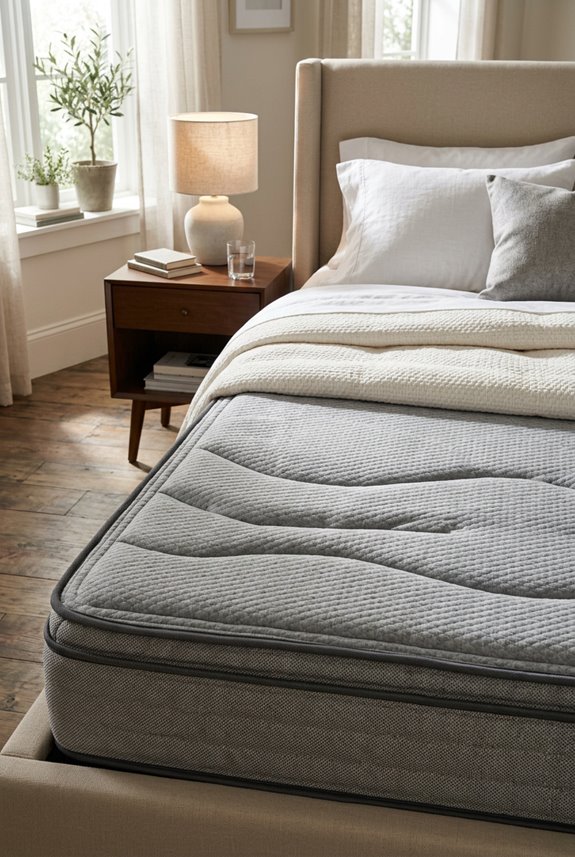
How does a mattress target the exact spots where your back and hips hurt most? Zoned support accomplishes this through strategic firmness variation. WinkBed Zoned Coil mattresses use a firmer center third directly under your hips and lower back, while softer zones cradle your head and feet. This targeted design maintains spinal alignment and reduces hip pressure relief naturally.
When you combine zoned support with memory foam layers, you receive significant lower back relief. The contoured foam works alongside the firmer zones to distribute your weight evenly across the mattress surface. This pressure distribution prevents your mid-body from sinking too deeply, which protects your spine during sleep. Studies show this combination delivers strong back pain relief for both back and side sleepers.
Match Firmness to Your Sleep Position and Weight
While zoned support gives your spine the structural help it needs, finding the right firmness level for your specific body and sleep position takes that protection further.
| Sleep Position | Under 230 lbs | Over 230 lbs |
|---|---|---|
| Side Sleepers | Medium-soft to medium | Medium to medium-firm |
| Back Sleepers | Medium to medium-firm | Medium-firm to firm |
| Stomach Sleepers | Firmer surface | Firmer surface |
Your weight and sleep position directly affect which memory foam mattress works best for you. Side sleepers need contouring that prevents excessive sinkage. Back sleepers benefit from medium-firm support that maintains spinal alignment without sagging. Stomach sleepers require firmness to keep hips elevated and spine straight. A memory foam mattress matched to your specific needs delivers superior pressure relief and measurable back pain reduction.
Accelerate Back Pain Recovery During Sleep
Your mattress does more than just support you at night. It’s actively working to reduce the strain on your back while you sleep. Quality memory foam with proper density (4.0 lbs/ft³ or higher) delivers genuine pressure relief by contouring to your body and maintaining spinal alignment. You’ll notice improvement during your break-in period, typically 2–4 weeks, as the foam softens and adapts to you.
Consider open-cell or gel-infused options if you tend to overheat. These cooling mattress features reduce nighttime stiffness. When combined with zoned support and a supportive foundation, memory foam helps you stay properly aligned regardless of your sleeping position. This sustained support means your back relaxes deeply, accelerating recovery and helping you wake up feeling better.
Choose Foam Density Based on Your Body Type
I’m going to help you find the right foam density for your specific body type, because what works for a lighter person won’t necessarily support a heavier person’s spine the same way. If you’re on the lighter side, you’ll want a softer foam that conforms quickly without pushing back too hard, while average-weight sleepers typically find that medium-firm density hits the sweet spot for both comfort and spinal alignment. Heavier sleepers need denser foam, 4.0 pounds per cubic foot or higher, to prevent sagging in the hips and shoulders where most of the weight concentrates.
Lightweight Sleepers Need Softer
How’s your current mattress treating your back? If you’re a lightweight sleeper under 130 pounds, softer foam makes a real difference. You need memory foam around 3.5–4.5 lbs/ft³ density to get proper contouring without sinking too deep. Softer foam cradles your shoulders and hips, delivering pressure relief while keeping your spine aligned correctly. A medium-soft option works especially well for side sleepers, protecting joint comfort without compromising support. Break-in periods are shorter for lighter bodies, though you’ll still need 2–4 weeks for full adaptation. Don’t skip this adjustment phase. The payoff is genuine back pain relief that lasts. Your density choice affects spinal health and long-term comfort.
Average-Weight Sleepers Prefer Medium-Firm
Most people weighing between 130 and 230 pounds find that medium-firm memory foam hits the sweet spot for back pain relief. The right foam density and support structure make all the difference for your spine.
Consider the following:
- Choose high-density foam (around 4.0 lbs/ft³) to prevent sagging and maintain midsection support
- Check ILD ratings for medium-firm options that balance contouring with necessary spinal alignment
- Look for zoned support that firms up under your hips while staying softer at shoulders
- Plan for a 2–4 week break-in period as your mattress adjusts to your body
Medium-firm memory foam delivers pressure relief without compromising alignment. Initial stiffness gradually transforms into comfort and pain relief as the mattress conforms to your body.
Heavier Sleepers Require Firmer Support
Why does a mattress that feels perfect for your 150-pound friend leave you sinking uncomfortably? If you’re a heavier sleeper, you need firmer support than average-weight sleepers. Choose higher foam density, around 4.0 lbs/ft³ or more, to prevent excessive sinkage and maintain spinal alignment.
Look for mid-to-high ILD ranges, which measure firmness. These values help balance contouring with proper support for your body. You’ll also want zoned support cores with denser torso and hip layers. These features prevent hip sag and midsection sinking that causes lower-back strain.
Memory foam firmness delivers pressure relief without compromising stability. When your spine stays neutral, you wake without pain. Heavier sleepers benefit from mattresses engineered specifically for their body weight, and the right foam density prevents discomfort and maintains proper spinal alignment.
Prevent Heat Buildup While Memory Foam Contours
When you’re shopping for a memory foam mattress, the cooling factor matters just as much as the comfort. You want your bed to cradle your spine while keeping you cool throughout the night.
Look for these cooling memory foam features:
- Gel memory foam and cooling gel infusions actively absorb heat away from your body
- Open-cell designs improve ventilation so air flows freely through the mattress
- Breathable covers with Tencel or copper infusions wick moisture and regulate temperature
- Phase-change materials redistribute warmth to prevent hot spots
The key is finding a mattress where memory foam contours to your pressure points while heat dissipation keeps you comfortable. Hybrid designs pairing memory foam with breathable coil cores deliver both support and temperature regulation for better sleep.