I’ll locate dog urine spots with UV light first. You’ll see them glow under darkness.
Then I match my cleaner to my surface type: enzymatic cleaners work best for concrete and wood. I apply the cleaner, wait as directed, and rinse thoroughly.
For stubborn spots, I use baking soda paste or vinegar to neutralize ammonia smell.
If the odor persists after a few days, bacteria are still thriving underneath, and professional help becomes necessary for deep penetration.
Locate Dog Urine Spots With a UV Light
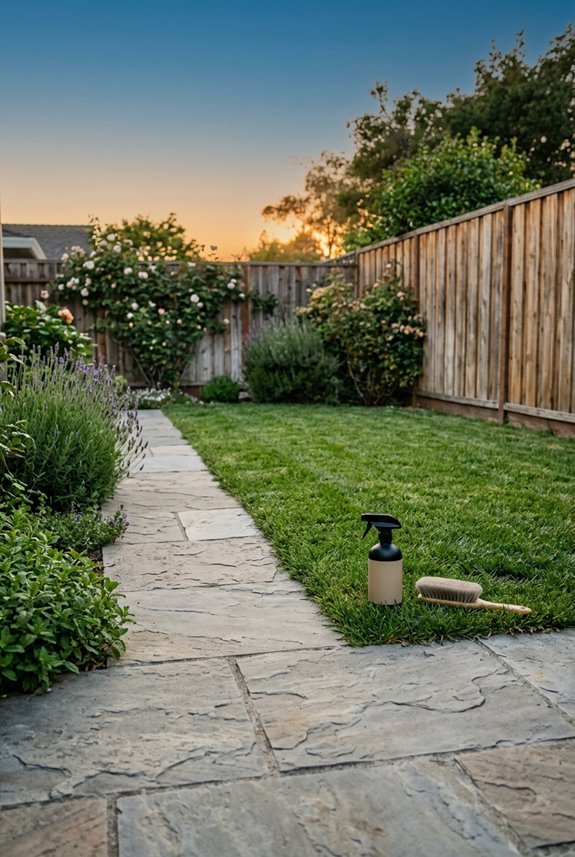
You can’t seem to find all those dog pee spots in your backyard, even though your nose tells you they’re there.
A UV light is an effective tool for this task. When you use a black light detector, dried urine reveals itself through a glowing residue that’s completely invisible to the naked eye. This happens because urine contains minerals and organic compounds that fluoresce under UV light.
Use this technique: inspect at dusk or indoors with lights off for the best contrast. Dark, moist areas show the strongest glow, so check shaded spots carefully. After rain or watering, revisit these zones since moisture intensifies the fluorescence.
Also look for faint halos around previously treated urine spots. These indicate areas you might have missed during cleaning. This systematic approach ensures you catch every problematic spot before neutralizing odors.

Certified Gentle & Safe Pet Carpet Cleaner Solution: Chlorine free, color safe, no hazardous propellants or residue; safe to use around pets and children; certified safe for all carpets with a Seal of Approval by the Carpet and Rug Institute (CRI)

FOR DOG URINE MESSES: Begins to break down and remove stains immediately on contact.
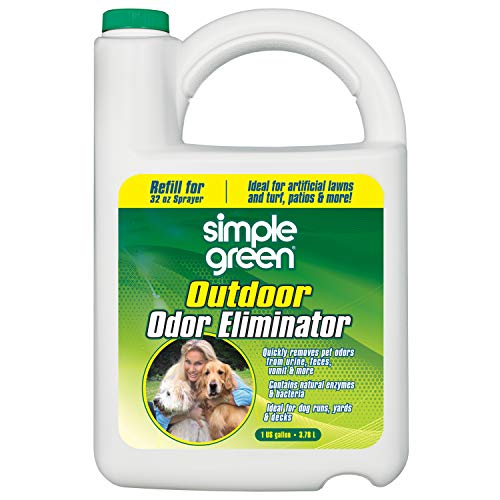
Quickly and effectively neutralizes pet odors left behind by urine, stool, vomit, and other organic soils
Match Your Cleaner to the Surface Type
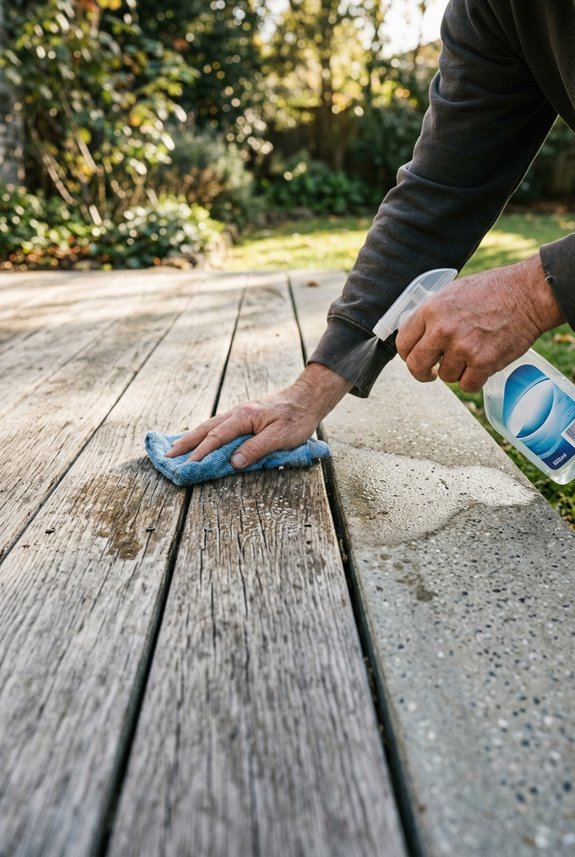
Not all cleaners work the same way on every surface in your yard. Choosing the right enzymatic cleaner for your surface type makes a significant difference in eliminating dog pee smell.
For concrete and brick, I use products like PetLab Plus or EcoStrong, which penetrate deep into porous materials where urine soaks in. On wood decks and artificial turf, these same enzymatic cleaners work well too.
Before I apply any cleaner, I test it on a hidden spot first to make sure it won’t discolor my yard. Then I saturate the area completely, letting the enzyme solution reach the substrate beneath surface residue. For harder surfaces, I follow up with a hose-down and some agitation to maximize effectiveness. This approach ensures you’re breaking down the odor source rather than masking it.

Find invisible stains: UV flashlight helps detect food stains and pet urine stains on rugs, carpets, and clothes that are otherwise invisible to the naked Eye.
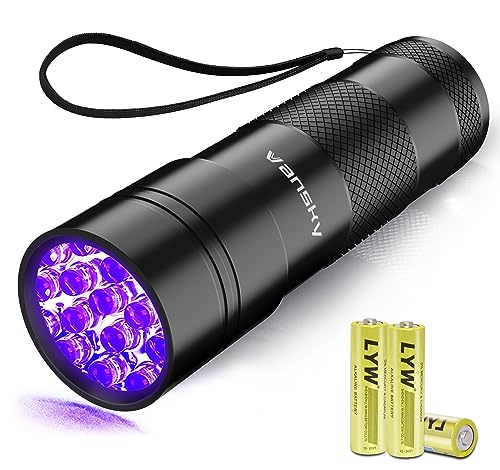
【INVISIBLE STAIN DETECTION】Equipped with 12 high-intensity 395nm UV LED beads, Vansky UV flashlight emits true 395nm wavelength that accurately detects dried pet urine stains on carpets or sofas. Under its light, stains glow with clearly visible fluorescence in the dark, allowing for precise cleaning and hygiene inspection. Helps eliminate household odors at the source and saves a significant amount on carpet cleaning expenses.

Invisible Stains Found: UV flashlight is perfect for detecting what naked eye can not see, like dried pet urine and food stains on rugs, carpets and clothes. Check whether the hotel sheets and pillows are clean.
Apply Enzymatic or Hydrogen Peroxide Cleaner
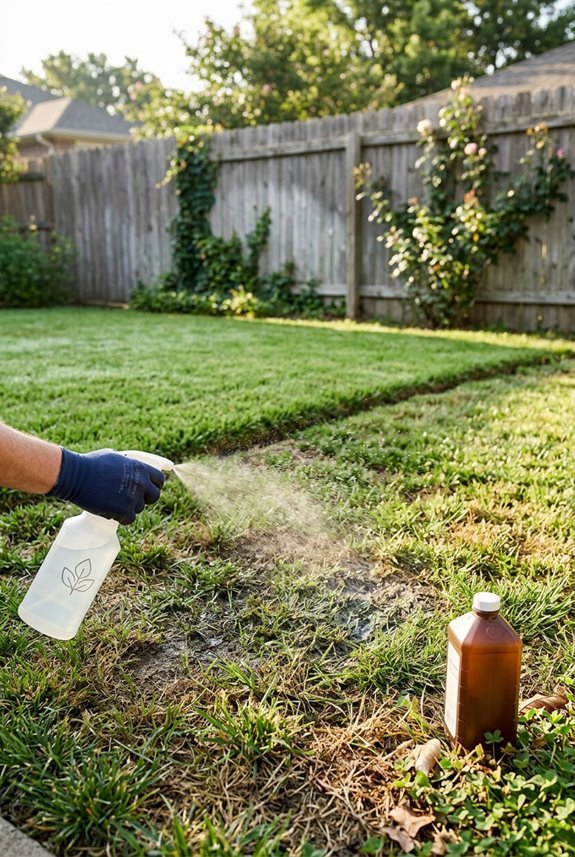
Once you’ve identified the affected areas, it’s time to choose your cleaning product. Enzymatic cleaners are the most effective option for breaking down the proteins and enzymes in urine that contain pheromones. These cleaners work by destroying what causes the smell and prevent your dog from returning to the same spot.
Hydrogen peroxide is another effective choice that accelerates odor removal by breaking down organic matter. Before applying either product, test it on a small, hidden area to avoid discoloring your grass or patio.
Follow the product directions carefully. Apply the cleaner, let it sit for the recommended time, then rinse thoroughly. This prevents soil pH buildup and ensures complete cleanup. You might need to reapply for stubborn stains.

STAIN AND ODOR REMOVER: Clorox Urine Remover for Stains and Odors breaks down urine to eliminate odor, not mask it, while the powerful hydrogen peroxide cleaner removes stains

STAIN AND UNWANTED SMELL REMOVER: Clorox Urine Remover for Stains and Unwanted smell breaks down urine to eliminate Unwanted smell, not mask it, while the powerful hydrogen peroxide cleaner removes stains

STAIN AND ODOR REMOVER: Clorox Urine Remover for Stains and Odors breaks down urine to eliminate odor, not mask it, while the powerful hydrogen peroxide cleaner removes stains
Try Budget-Friendly DIY Fixes: Baking Soda and Vinegar
If you’d rather skip the store-bought cleaners, baking soda and vinegar can do the job just fine and won’t break your budget. Baking soda works as an excellent odor neutralizer for outdoor spaces where dogs have had accidents.
Mix baking soda with water to create a thick paste, then apply it directly to the affected concrete. Scrub the area with a stiff brush and let the baking soda sit for about 30 minutes. This waiting period maximizes odor absorption. Afterward, rinse thoroughly with fresh water to prevent soil pH imbalance and crust buildup.
For stubborn spots, follow up with vinegar to neutralize any remaining ammonia smell.

Effective Odor Elimination: Absorbs and destroys big odors in small spaces, keeping your home smelling fresh and clean.

VET RECOMMENDED: Veterinary Dermatologist Recommended Product

Proven Performance Since 2005: Bio 41 delivers professional-grade odor elimination, earning trust for nearly two decades
Stop Your Dog From Peeing in the Same Spots
Once your dog picks a spot to pee, the smell keeps pulling them back because their pheromones mark it as a bathroom zone. Enzymatic cleaners actually eliminate the odor source, which is essential for breaking this cycle. Designate one potty area and reward your dog when they use it instead. With consistent training and proper cleanup, you can stop those repeat accidents and reclaim your backyard.

Eliminates Stains, Odors, & Residue: If it’s gross, it’s gone; from blowouts, urine, vomit, and other organic spills; Rocco & Roxie stain & odor eliminator has a subtle Meyer lemon scent that quickly dissipates, leaving your space feeling fresher

Certified Gentle & Safe Pet Carpet Cleaner Solution: Chlorine free, color safe, no hazardous propellants or residue; safe to use around pets and children; certified safe for all carpets with a Seal of Approval by the Carpet and Rug Institute (CRI)

MULTI-PURPOSE FORMULA: Professional-strength enzymatic cleaner designed for surfaces including floors, bathrooms, toilets, drains, trash cans, and, cat pee enzyme cleaner
Understanding Pheromone Attraction
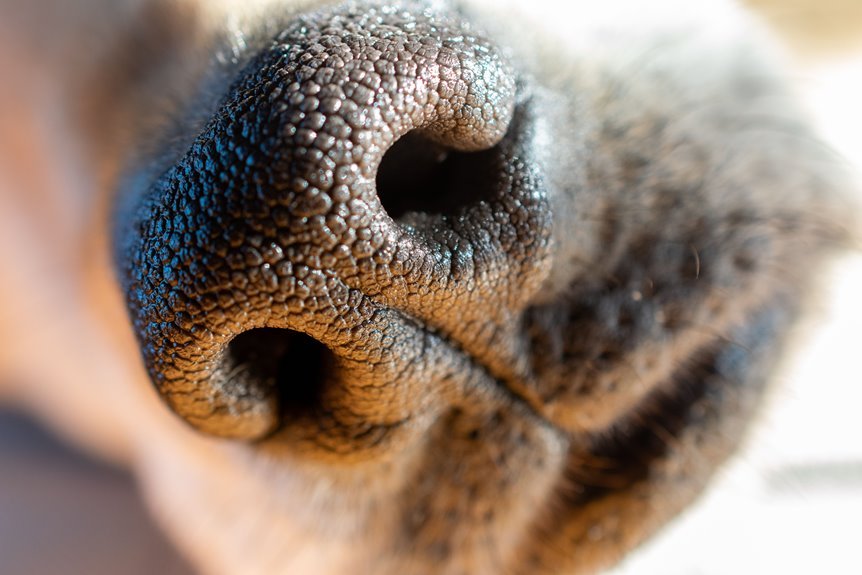
Why does your dog keep peeing in that one corner of the yard, no matter how many times you clean it? The answer lies in pheromones, invisible chemical signals your dog leaves behind in urine. These pheromones mark territory and create a learned cue that tells your dog, “This is my bathroom spot.” Your dog’s nose picks up on these signals far better than you can, making that corner irresistibly appealing.
Bacteria in urine produce ammonia, which reinforces the lingering urine smell even after you’ve cleaned. Your dog detects these pheromones and returns to mark the same location repeatedly. Understanding this cycle helps you break it. You’ll need to eliminate the pheromone trail completely, not just mask the odor with surface cleaning.
Enzymatic Cleaner Solutions
How do you eliminate the invisible pheromone trail your dog keeps following? An enzymatic cleaner designed for outdoor use is your answer. These products contain live bacteria that break down the urine proteins and pheromones causing your dog to return to the same spots.
Start with thorough prep work. Remove visible waste, sweep the area, and moisten the surface. Then apply your enzymatic cleaner according to package directions and let it sit, usually several hours or overnight, so bacteria can digest the odor compounds.
Choose cleaners specifically labeled for outdoor surfaces like concrete, grass, or brick. You might need to reapply if stubborn odors persist, especially in porous materials where urine soaks deep. This approach tackles the problem at its source and breaks the marking cycle.
Designated Potty Area Training
While enzymatic cleaners handle the chemistry side of odor elimination, you’ll also need to change your dog’s behavior so they stop returning to those same spots. Designating a specific potty area works remarkably well. Pick one corner of your yard and consistently take your dog there, using a cue word like “potty time” each visit. When your dog urinates in that spot, praise them enthusiastically and offer treats. This creates a powerful association between the location and positive rewards.
Keep the designated potty area appealing by removing waste promptly and occasionally refreshing it with familiar scents. During training, restrict your dog’s access to other yard sections to prevent accidents elsewhere. Once your dog reliably uses their designated spot, you can gradually expand their freedom. If urine smell problems return, simply tighten the training boundaries again until habits strengthen.
Know When to Call a Professional
If the smell lingers after you’ve tried enzymatic cleaners and DIY methods, call in professionals who can assess your specific surface, whether it’s concrete, wood, or turf, and use specialized equipment like industrial vacuums or pressure washers. Also get a professional opinion if you spot water damage, mold, or algae growing in the affected areas. These problems can worsen odors and create health risks for your family. A trained remediation service can tackle large areas you can’t handle alone and help prevent the issue from spreading to other spots in your yard.

Neutralize Odors, Don't Mask Them: Our enzymatic turf deodorizer for pet urine eliminates smells at the source. By leaving your yard smell and scent-marker free, our outdoor surface odor eliminator for dogs prevents remarking, protecting your grass

FOR DOG URINE MESSES: Removes dog urine and the yellow, sticky residue
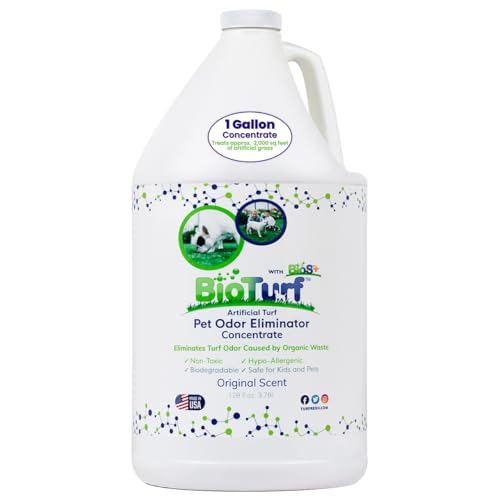
Includes 1 Gallon Bio-Enzymatic Concentrate: Each bottle contains one gallon of BioS+ concentrated formula designed to make multiple gallons of cleaning solution. This powerful enzymatic cleaner specifically targets and digests the source of odors from dog urine, feces, and organic waste, effectively neutralizing smells rather than just masking them.
Persistent Odor Problems Remain
Ever tackled a stubborn dog pee spot only to have the smell creep back after a few days?
You’re not alone. Sometimes urine odor persists because the source runs deeper than surface cleaning reaches. Enzymatic cleaners work best, but they need time and moisture to break down the urine compounds effectively. When you reapply treatments after the area dries, you get better results because bacteria need dampness to digest odors completely.
For really stubborn spots, scrub with a brush and let the cleaner sit for about ten minutes. This helps penetration into porous surfaces like concrete. If the smell still lingers after thorough cleaning, consult a professional. They can assess your yard’s surface and recommend specialized odor remediation. Professional help may be necessary for persistent problems.
Damage Assessment and Prevention
How much damage has dog urine actually done to your yard? If you’ve tried enzymatic cleaners multiple times and the urine odor still lingers after several weeks, your surfaces might need professional assessment. Concrete and wood absorb urine deeply, sometimes beyond DIY reach. Check whether the smell returns within days of treatment. That’s a sign bacteria’s still thriving underneath. Before calling professionals, measure the affected area. Spots larger than a few feet across often need expert help. Prevention matters now too. Create a designated potty zone, rinse it frequently, and clean accidents immediately. These habits stop new damage while professionals handle existing problems. You’re building better yard habits alongside solutions.
Professional Cleaning Service Benefits
Sometimes your own efforts aren’t enough, and that’s where professionals come in. Professional cleaning services bring real advantages when you’re dealing with stubborn urine smell that won’t quit.
What makes them worth considering: they use industrial-grade equipment that penetrates deep into porous surfaces like concrete and soil, places where DIY treatments often fall short. They also carry UV detectors to locate hidden urine spots you’d miss otherwise.
Call professionals when odor persists after your own attempts or when you’re facing large areas like artificial turf. They’ll apply enzyme-based cleaners safe for your pets and plants, then guide you toward prevention strategies. This approach reduces the time spent on remediation and eliminates guesswork about whether treatment has been effective.
Why Dog Pee Smells and Sticks (Optional Deep Dive)
Why does dog urine create such a persistent problem in your backyard? The answer lies in bacteria. When urine sits on soil or grass, bacteria break it down and produce ammonia, the sharp, nose-burning smell you’re battling.
What makes it stick around is pheromones. Your dog’s urine contains these chemical signals that mark the spot. Once your dog smells them, they’ll return to the same location again and again, reinforcing the problem.
Standard cleaners don’t solve this issue. You need enzymatic cleaners instead. These products actually destroy the proteins and enzymes making up the pheromones rather than just masking the odor. Without those chemical markers, your dog loses the urge to revisit the spot, breaking the cycle.

Efficient Pet Urine & Stain Detector Blacklight Flashlight: The upgraded ultraviolet light LED can show food stains and pet urine stains on rugs, carpets more clearly, Escolite 51 UV light LED beam covers a larger area, enabling you to locate the affected areas effectively. Blacklight for pet urine detection is a lifesaver for cleaning your puppy's accidents (ONLY EFFECTIVE IN DETECTING DRY URINE).

【UV LED FLASHLIGHT MATERIAL】 - UV Torch spotlight blacklight flashlights led are made of heavy-duty resistant aerospace-grade aluminum alloy and 68pcs led, Professional Grade 395nm. That’s why the professionals prefer GLOSSDAY.

Pet Urine and Stains Detector : Consciot UV flashlights emits 395nm wavelength with 51 top quality ultraviolet led lights, is perfect for detecting cat/dog dry urine and stains on carpets, grounds and clothes, matching with pet odour eliminator