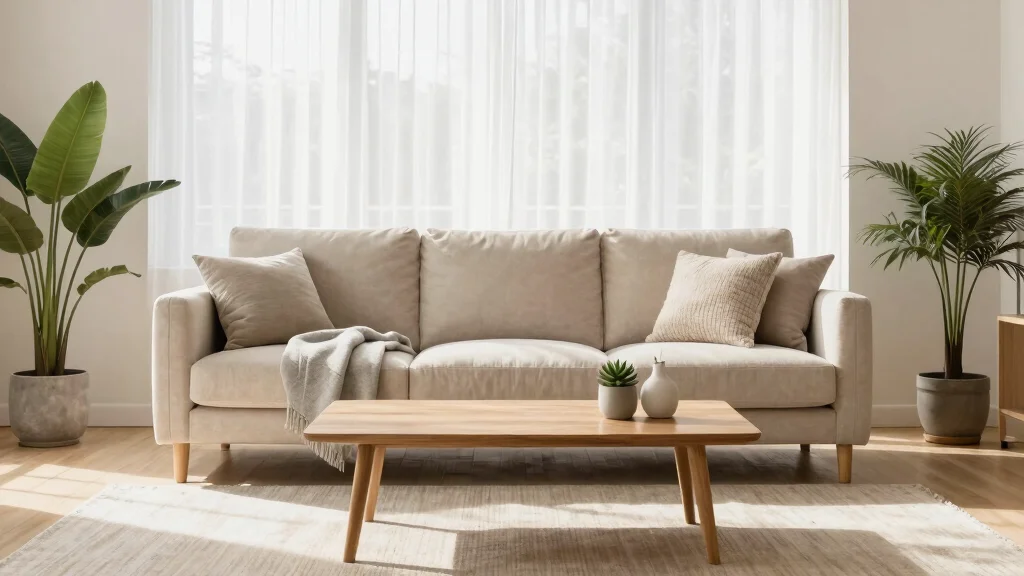
Creating a peaceful living room is something many of us yearn for. In today’s fast-paced world, we often crave spaces that feel clean and calm. This post is crafted for anyone looking to bring a touch of serenity into their home. If you appreciate minimalist living room decor, you’re in the right place. Here, you’ll find 16 simple design ideas that transform your living area into a stylish, cozy sanctuary.
You’ll discover various modern decor ideas that use a neutral color palette and stylish furniture arrangements. Whether you’re a busy parent trying to organize your space or a young professional seeking tranquility after a long day, this guide has something for you. Each idea is designed to help you create a living room that feels inviting yet uncluttered, making it easier for you to unwind and recharge.
From embracing natural light to incorporating textured accessories, these tips will help you enhance your living space without overwhelming it. So, let’s dive into the world of clean, calm living room designs!
Key Takeaways
– Embrace Neutral Tones: Use a neutral color palette to create a soothing environment that feels open and airy. This helps in promoting a sense of peace within the space.
– Choose Minimalist Furniture: Opt for furniture that is functional yet stylish. Minimalist pieces can enhance the room’s look without overcrowding it.
– Incorporate Natural Light: Maximize natural light by using sheer curtains or keeping windows unobstructed. Natural light makes the space feel more inviting.
– Add Potted Plants: Incorporating greenery can liven up your living room. Plants not only add beauty but also improve air quality.
– Keep Floor Space Clear: Maintain an open floor plan by regularly decluttering. This allows for a more spacious feel, making your living area more enjoyable.
1. Embrace Neutral Tones
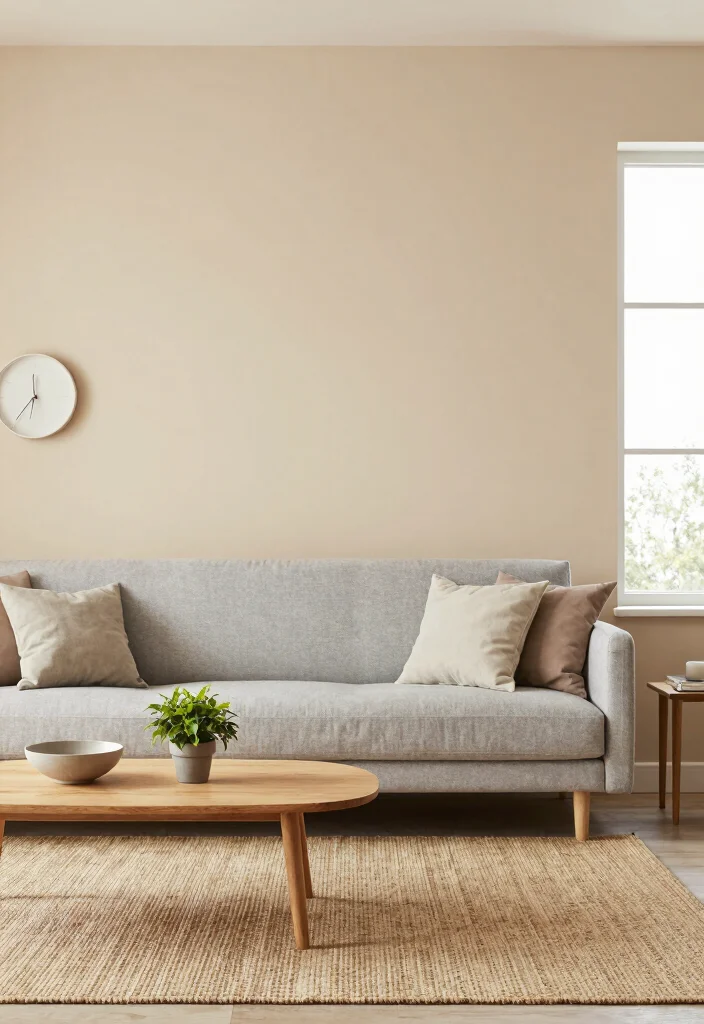
Embracing a neutral color palette is a powerful way to cultivate a serene living room atmosphere. Soft beiges, crisp whites, and gentle grays create a harmonious backdrop that lets your furnishings and decor take center stage. This timeless combination not only expands the visual space but also invites a sense of calm into your home. Picture your walls painted in a soothing light hue, complemented by furniture in similar shades, establishing a cohesive and tranquil environment.
To truly harness the potential of neutrals, consider these practical tips. Opt for budget-friendly paint samples to find your ideal hue, and explore thrift stores for secondhand furniture in complementary tones. This approach connects with broader trends toward minimalism and can evoke feelings of relaxation and comfort.
Consider these elements to maximize this palette’s potential:
– Pair light beige walls with soft white furniture.
– Incorporate various shades of gray in textiles and accessories.
– Use natural materials like wood and stone to add texture without clutter.
This design choice enhances your space, creating a peaceful atmosphere where you can unwind and recharge.
Fun fact: neutral tones can visually enlarge a small living room by up to 40%, letting furniture shine. Embrace beiges, whites, and gentle grays for a calm, cohesive space you’ll actually live in.
2. Choose Minimalist Furniture
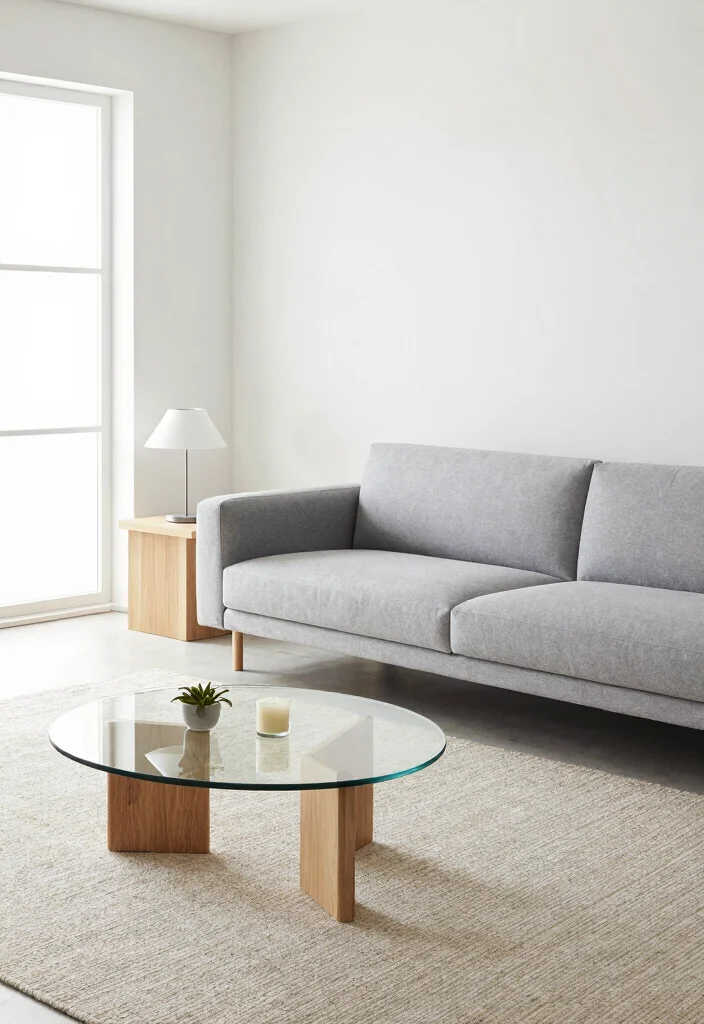
Selecting minimalist furniture is essential for fostering a clean and tranquil living room. Look for pieces that embody functionality with simplicity, such as a sleek sofa or a low-profile coffee table that keeps your space uncluttered. Aim for multi-purpose items, like an ottoman that offers storage or a side table that can easily be relocated.
To implement this concept, focus on budget-friendly furniture options that offer both style and functionality. Consider browsing local marketplaces for gently used pieces that fit your aesthetic. This aligns with the growing trend of sustainable living while enhancing the room’s peaceful vibe.
Follow these guidelines for furniture selection:
– Select items with streamlined forms and fewer embellishments.
– Stick to a few key pieces instead of overcrowding the space.
– Consider furniture that complements your color scheme to unify the look.
By incorporating minimalist furniture, your living room will radiate a calm, inviting style that encourages relaxation and conversation.
3. Incorporate Natural Light
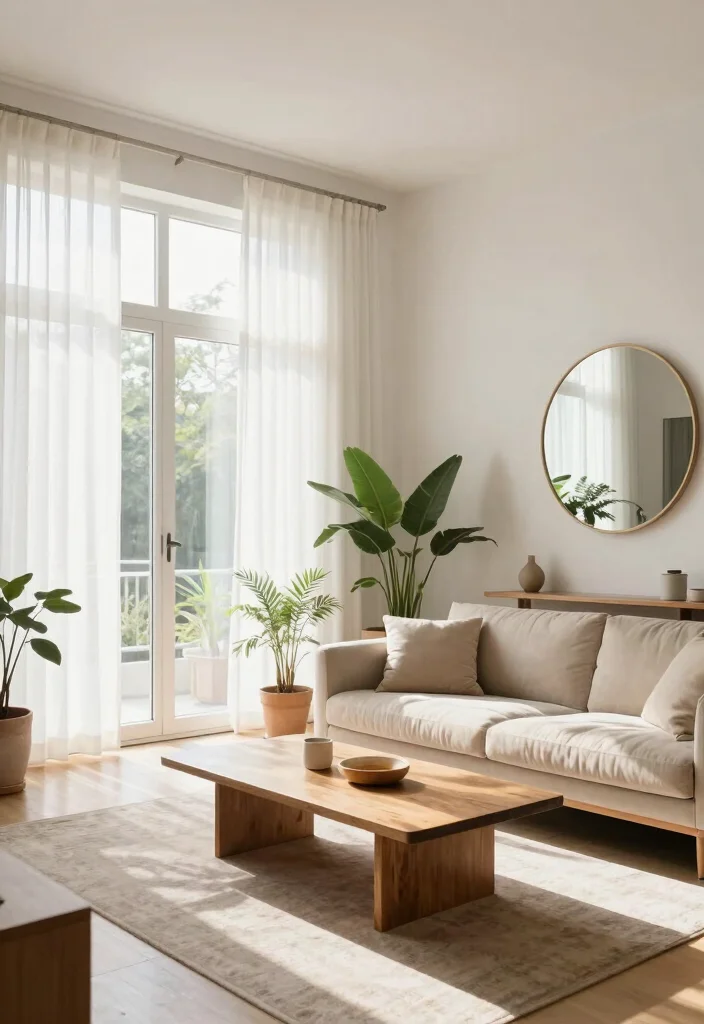
Maximizing natural light is crucial for creating an inviting and peaceful living room. Large windows or sliding glass doors welcome sunlight, instantly making the space feel more open and airy. If privacy concerns arise, sheer curtains can beautifully filter the light while maintaining a sense of openness. Additionally, mirrors can reflect natural light, enhancing the room’s brightness and openness.
To effectively increase light in your space, consider using lightweight curtains that allow sunlight to pour in. Strategically place mirrors across from windows to amplify brightness. This approach connects with the trend of embracing wellness through natural elements and can uplift your mood.
Here are some natural light tips:
– Use light, airy curtains to maintain privacy while allowing light in.
– Strategically position mirrors to enhance brightness.
– Avoid heavy drapes that block light.
By prioritizing natural light, you’ll cultivate a refreshing atmosphere that elevates your decor and nurtures your spirit.
How To Choose Minimalist Furniture for Your Living Room
When designing a minimalist living room, selecting the right furniture is crucial. To create a clean and calm living space, consider these important criteria while choosing your pieces.
1. Size Matters
Before you fall in love with a piece, measure your space. A good rule is to leave at least 3 feet of walking space around furniture. This helps your living room feel open and uncluttered. Remember, oversized furniture can overwhelm a small area, while too-small pieces can feel lost in a large room.
2. Material Selection
Choose materials that promote a serene atmosphere. Natural woods, soft fabrics, and metals often work well in minimalist designs. For example, a light oak coffee table can add warmth without being too heavy. Consider durable materials that are easy to clean to maintain that calm vibe.
3. Functionality First
Opt for multi-functional furniture that serves more than one purpose. A sofa bed or a coffee table that doubles as storage can save space and reduce clutter. Think about how you use your living room. Choose pieces that enhance your lifestyle without adding unnecessary items.
4. Neutral Color Palette
Stick to a neutral color palette to keep your living room looking crisp and cohesive. Shades of white, gray, beige, and soft pastels create a soothing environment. You can add a splash of color with small accessories or artwork, but keep the main pieces muted to maintain that minimalist feel.
5. Style Consistency
Ensure that your furniture adheres to a consistent style. Whether you lean towards modern, Scandinavian, or mid-century designs, all pieces should complement each other. This harmony creates a more inviting and peaceful space.
6. Personal Touch
While minimalism emphasizes simplicity, don’t forget to personalize your space. Choose a few decorative items that reflect your personality but keep it limited to avoid clutter. A single piece of art or a carefully selected plant can make a big impact without overwhelming the room.
Pro Tip: Before purchasing, visualize how each piece fits into your space. Use painter’s tape to outline dimensions on your floor. This helps you see if the size and layout are right for your living room’s flow.
By focusing on these key elements when choosing minimalist furniture, you can create a stylish and calming living room that feels open and inviting. Remember, it’s all about balance—functionality, comfort, and aesthetics should work together harmoniously.
4. Use Textured Accessories
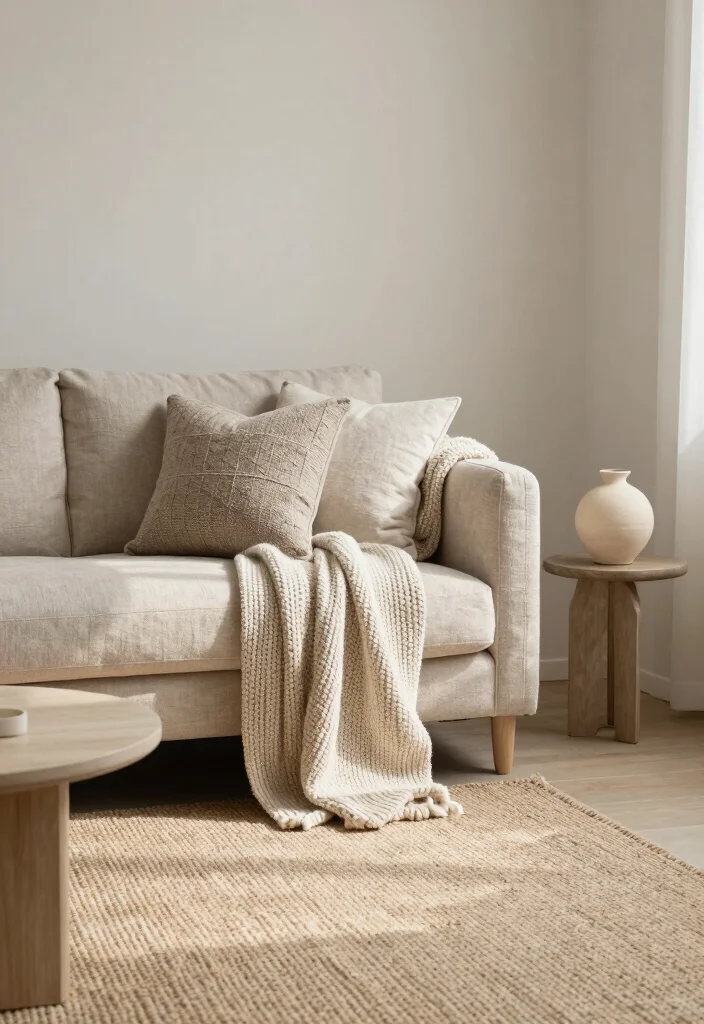
Incorporating textured accessories adds depth and interest to your minimalist living room without overwhelming the design. Think of soft throws, plush cushions, and woven rugs that create warmth and comfort while keeping the aesthetic simple. Textures like knits, linens, or natural fibers can introduce subtle layers, making the space feel cozy and inviting.
To enhance your design, mix and match textures to create a layered look. Look for budget-friendly options at local markets or online shops. This method aligns with current trends towards tactile experiences in home decor, fostering a sense of comfort and warmth.
Consider these accessory tips:
– Blend various textures—combine a soft throw blanket with smooth cushions.
– Use natural materials like wool or cotton for a touch of warmth.
– Keep colors neutral to maintain a minimalist vibe.
Textured accessories allow you to create a cozy atmosphere that feels layered yet serene, perfect for unwinding after a long day.
5. Create a Cozy Reading Nook
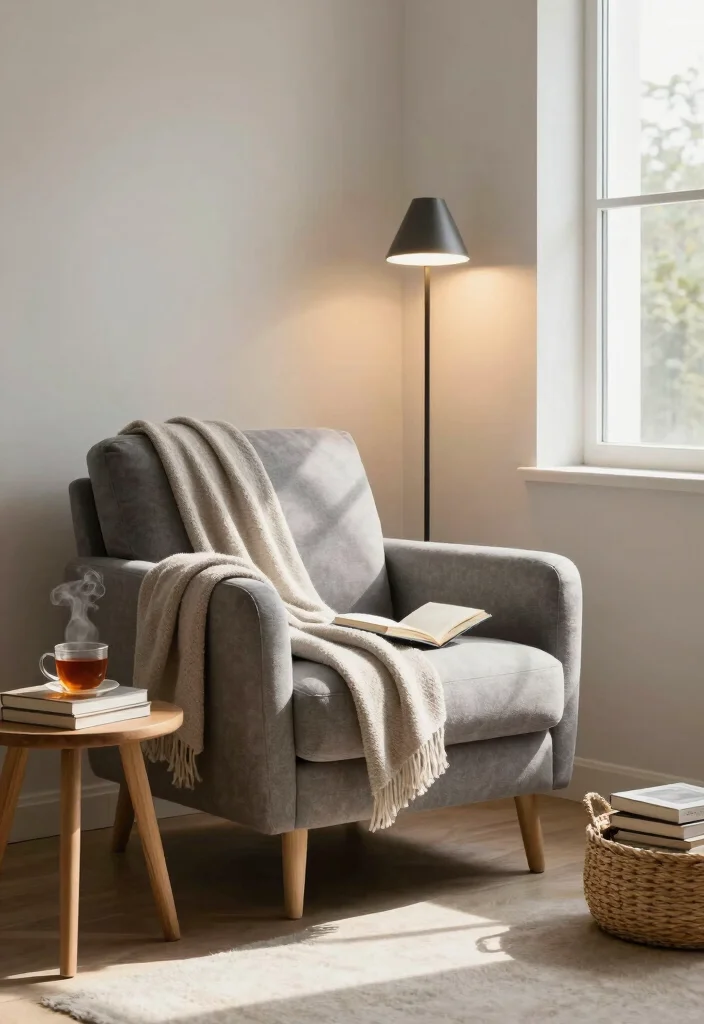
A cozy reading nook adds a delightful touch to your minimalist living room, providing a designated space for relaxation and quiet time. A simple armchair, a small side table, and a reading lamp can transform an unused corner into a comforting retreat. Consider organizing books on a simple shelf or in a stylish basket to keep the area tidy and inviting.
To create your nook, position the chair near a window for natural light and choose a soft armchair that combines comfort with style. This personal retreat encourages peaceful moments spent with your favorite books and aligns with the trend of creating dedicated spaces in homes.
Here are some nook tips:
– Position the chair near a window for natural light.
– Choose a soft armchair for ultimate comfort and style.
– Use a small table to hold a cup of tea or your current read.
This nook enhances your living space’s overall serenity, inviting you to unwind and enjoy a good story.
6. Opt for Open Shelving
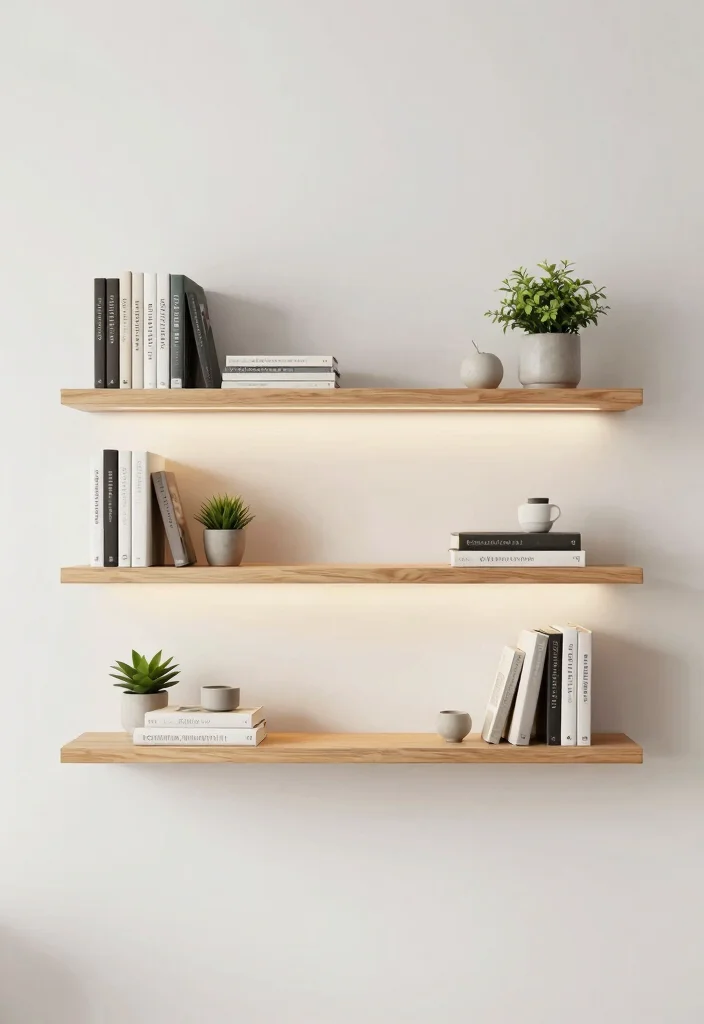
Open shelving can elegantly display your favorite decor items while maintaining an airy feel in your living room. Instead of bulky cabinets, consider floating shelves or simple bookcases that showcase neatly arranged books, plants, and minimalistic decor. This stylish approach encourages organization and adds character without detracting from the minimalist aesthetic.
To maximize the impact of open shelving, keep items grouped by color or type for a cohesive look. Explore DIY options for building shelves to stay within budget. This trend promotes a clean and organized space while allowing your personality to shine through.
Here are some open shelving tips:
– Keep items organized by type or color for a cohesive look.
– Limit decorative items to a few favorites to avoid overcrowding.
– Use natural materials like wood or metal for an elegant finish.
Open shelving adds character to your living space without compromising the calm vibe, allowing personal touches to shine through.
7. Keep Decor Simple
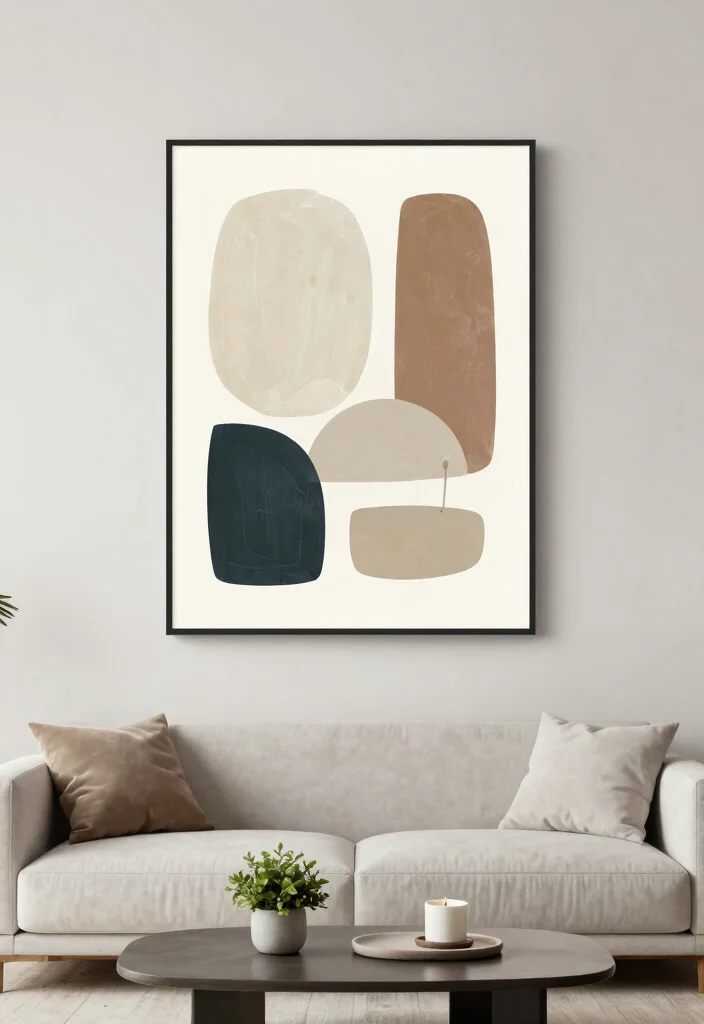
In a minimalist living room, simplicity reigns supreme. Avoid cluttering your space with excessive decorative items. Instead, select a few standout pieces that resonate with your personal style. A large artwork or a unique sculpture can serve as a striking focal point while keeping the surrounding area uncluttered.
To achieve this, focus on high-quality decor items that harmonize with your neutral color palette. Regularly assess your decor to ensure each piece brings joy and fits the overall aesthetic. This approach aligns with current trends that celebrate intentional living and minimalism.
Consider these decor tips:
– Focus on high-quality pieces rather than quantity.
– Select decor that complements the neutral color palette.
– Regularly assess items to ensure they still bring you joy and fit the space.
A simple decor approach will help maintain a clean atmosphere supporting relaxation and serenity in your living room.
A living room simple design shines with fewer pieces. Pick one bold focal point—art or sculpture—and let the rest breathe in a neutral palette. Regularly reassess: if it doesn’t bring joy, it’s clutter, not decor.
8. Cozy Up with Layers
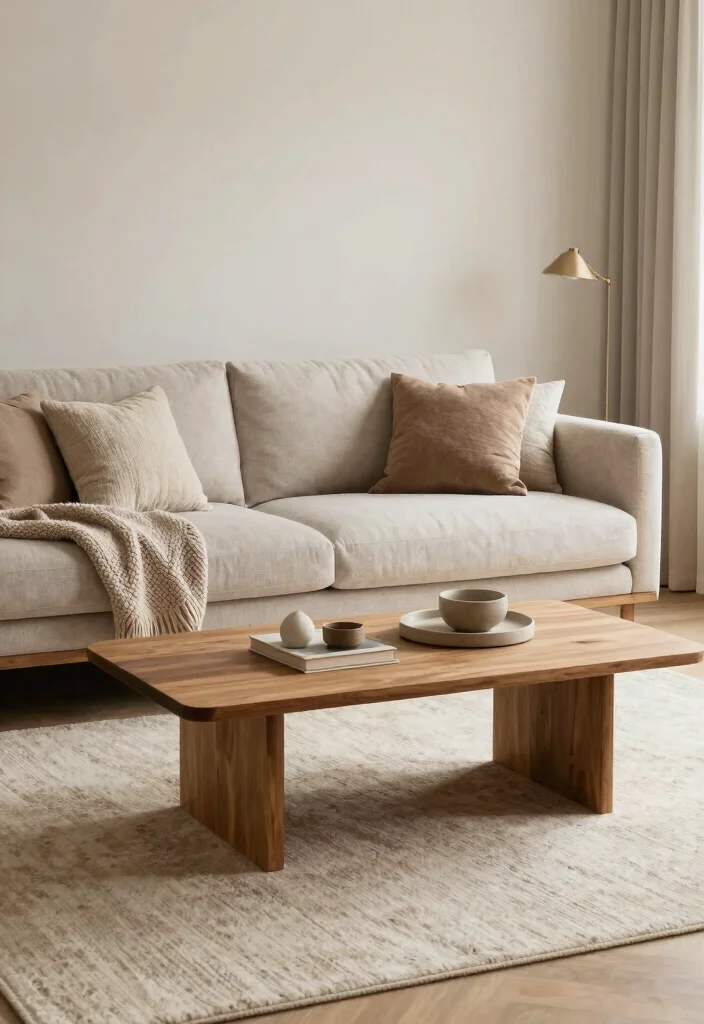
Layering adds depth to a minimalist living room without detracting from its simplicity. Use a variety of materials and textures to create warmth and comfort. For instance, pair a soft rug with a cozy throw and a few textured pillows on your sofa. This layered approach invites relaxation and makes the space feel more approachable and lived-in.
To master layering, start with a solid rug and build up with softer textiles that complement your design. Explore local shops for unique finds that enhance the space. This trend emphasizes the importance of comfort and coziness in minimalist design.
Take note of these layering tips:
– Start with a solid rug and build up with softer textiles.
– Mix and match textures—think of knits, smooth fabrics, and natural fibers.
– Balance layers with neutral colors to maintain a clean look.
Cozy layers transform your living space into an inviting haven that encourages guests to linger and enjoy.
9. Add Potted Plants
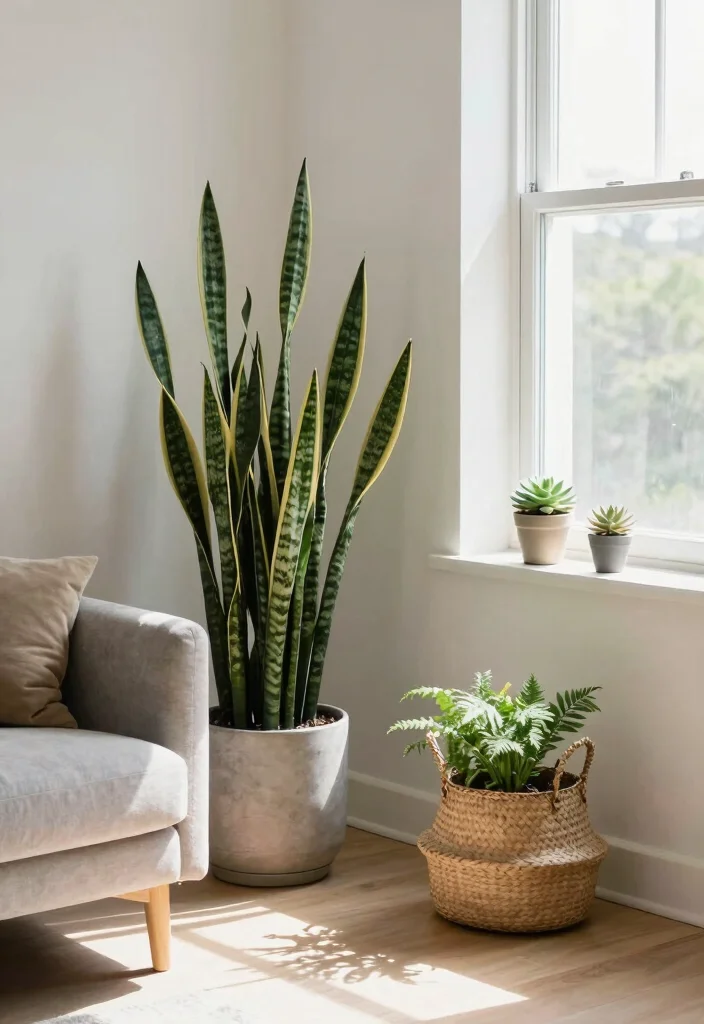
Incorporating potted plants is a wonderful way to bring nature indoors, enhancing your minimalist living room while promoting a serene atmosphere. Whether you choose large floor plants or small succulents, greenery adds freshness and life to the space while purifying the air.
For easy care, select low-maintenance plants like snake plants or pothos. Group plants of varying heights for visual interest and position them near windows for optimal sunlight. This trend not only beautifies your space but also fosters well-being by connecting you to nature.
Consider these plant tips:
– Choose low-maintenance plants for easy care, like snake plants or pothos.
– Group plants of varying heights for visual interest.
– Position plants near windows for optimal sunlight.
Integrating greenery will make your living room feel vibrant and connected to nature, enhancing its serene vibe.
10. Use Multi-Functional Pieces
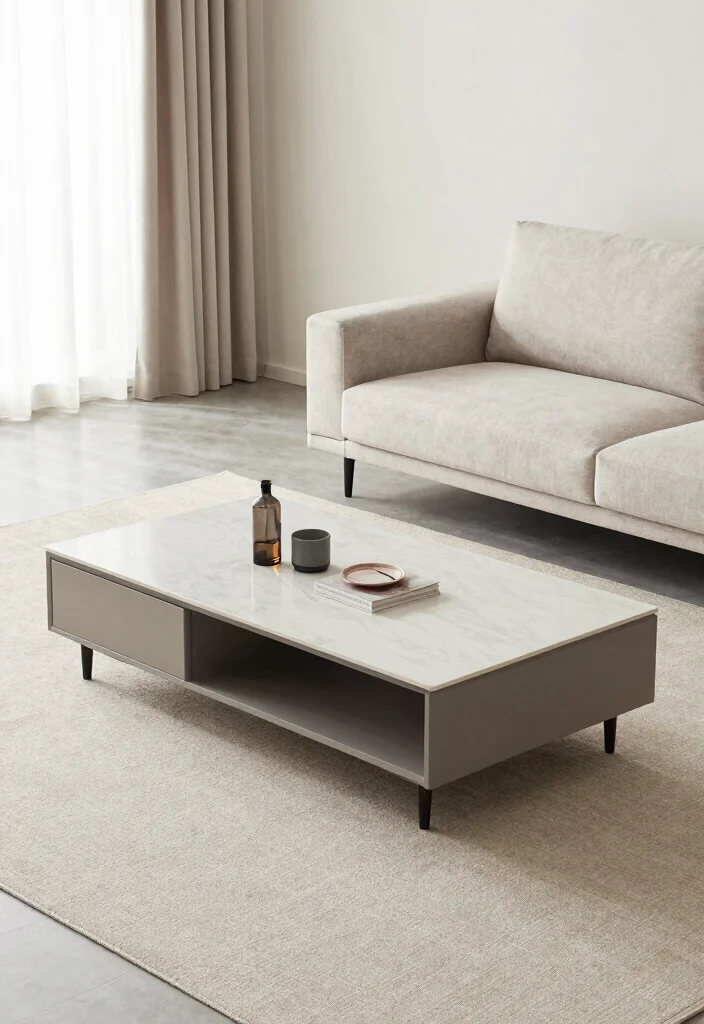
In a minimalist living room, every piece of furniture should have a purpose. Multi-functional furniture maximizes space and keeps the area organized. Consider stylish coffee tables that double as storage or a sofa bed for accommodating guests without needing extra room.
To find the right multi-functional pieces, look for ottomans that provide seating and storage. A fold-out desk can serve work-from-home needs without cluttering the space. This approach not only enhances functionality but aligns with minimalist principles by limiting items in the room.
Here are some multi-functional tips:
– Look for ottomans that can serve as seating and storage.
– Consider a fold-out desk for work-from-home needs.
– Use benches with hidden compartments for added functionality.
This strategy reinforces the minimalist aesthetic while ensuring your living space remains organized and inviting.
11. Create a Peaceful Layout
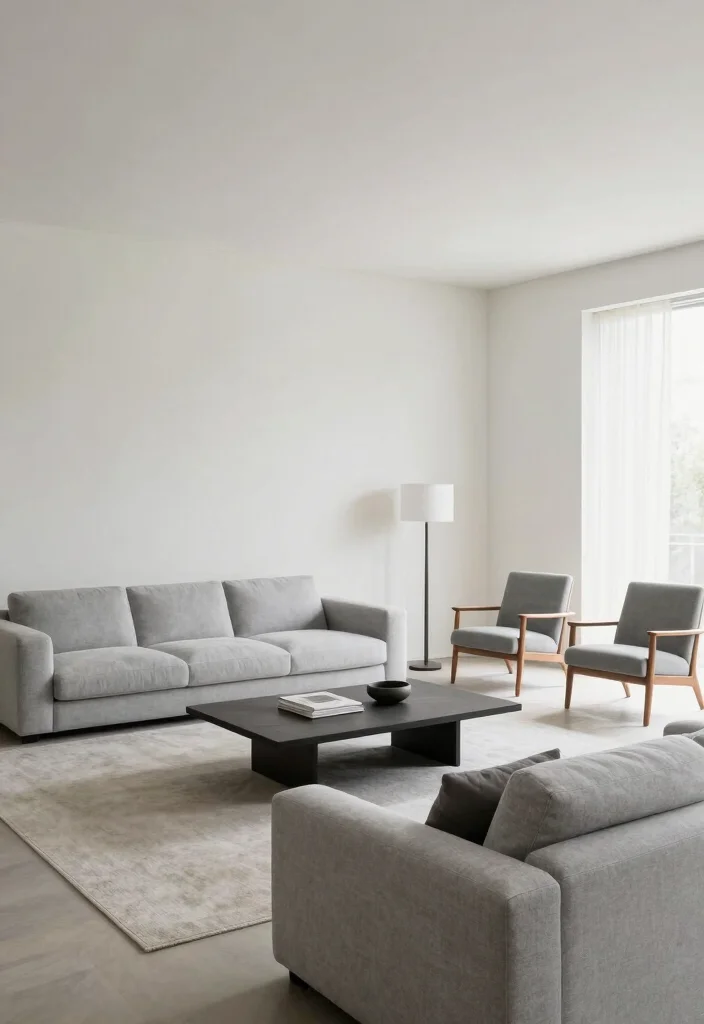
A thoughtful furniture layout is vital for fostering a calm living room environment. Aim for an arrangement that encourages conversation while maintaining openness. Avoid crowding the space with excess furniture, and leave ample room for movement. Consider how different areas can be utilized without interruption.
To create a peaceful layout, position seating to promote interaction without blocking pathways. Ensure tables and decor are easily reachable from seating areas. This cohesive design approach supports the trend of intentional living spaces that enhance connection.
Follow these layout tips:
– Position seating to encourage interaction without blocking pathways.
– Keep tables and decor within easy reach of seating areas.
– Ensure there’s a clear flow from entrance to seating and around the room.
A well-planned layout creates a calm atmosphere where people can gather comfortably and enjoy each other’s company.
12. Incorporate Soft Lighting
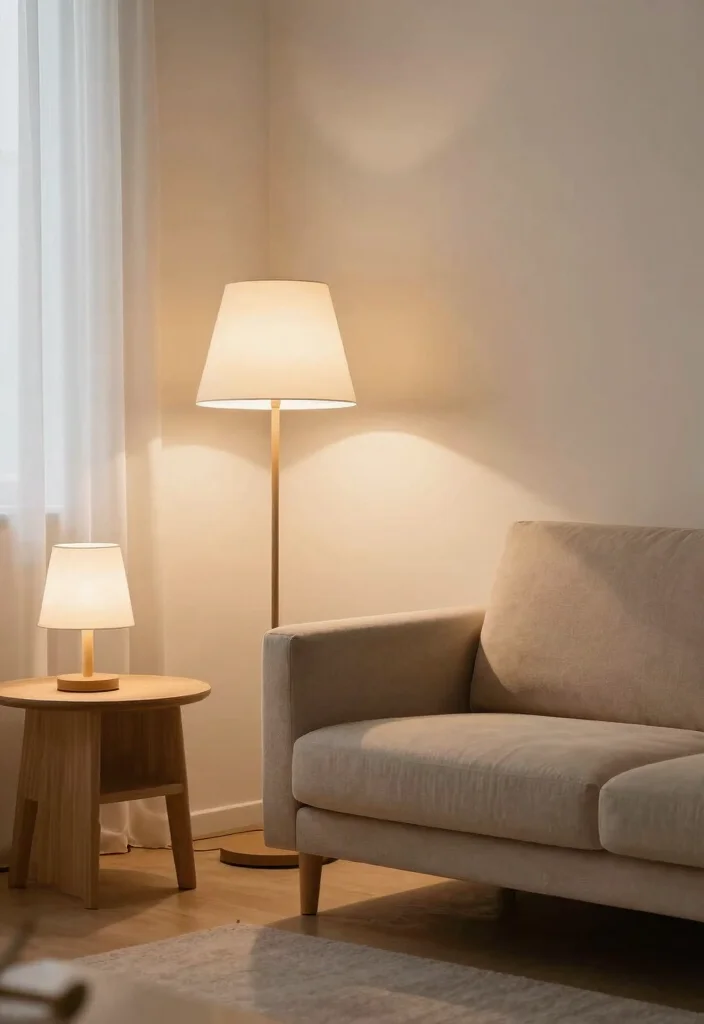
Soft lighting can significantly enhance the atmosphere of your living room, making it feel warm and inviting. Layered lighting using table lamps, floor lamps, and ambient lights helps you achieve this cozy vibe. Steer clear of harsh overhead lights; instead, opt for dimmable options to adjust brightness based on your needs.
To create the right lighting, use various light sources at different heights to add depth. Warm-toned bulbs will provide a cozy glow, while positioning lamps near seating areas creates inviting spots for reading and relaxation. This aligns with the trend of using lighting to enhance mood and comfort.
Consider these lighting tips:
– Use a combination of light sources at various heights to create depth.
– Choose warm-toned bulbs for a cozy glow.
– Position lamps in corners or near seating for reading and relaxation.
With the right lighting, your living room transforms into a tranquil space perfect for unwinding or entertaining.
13. Personalize with Art
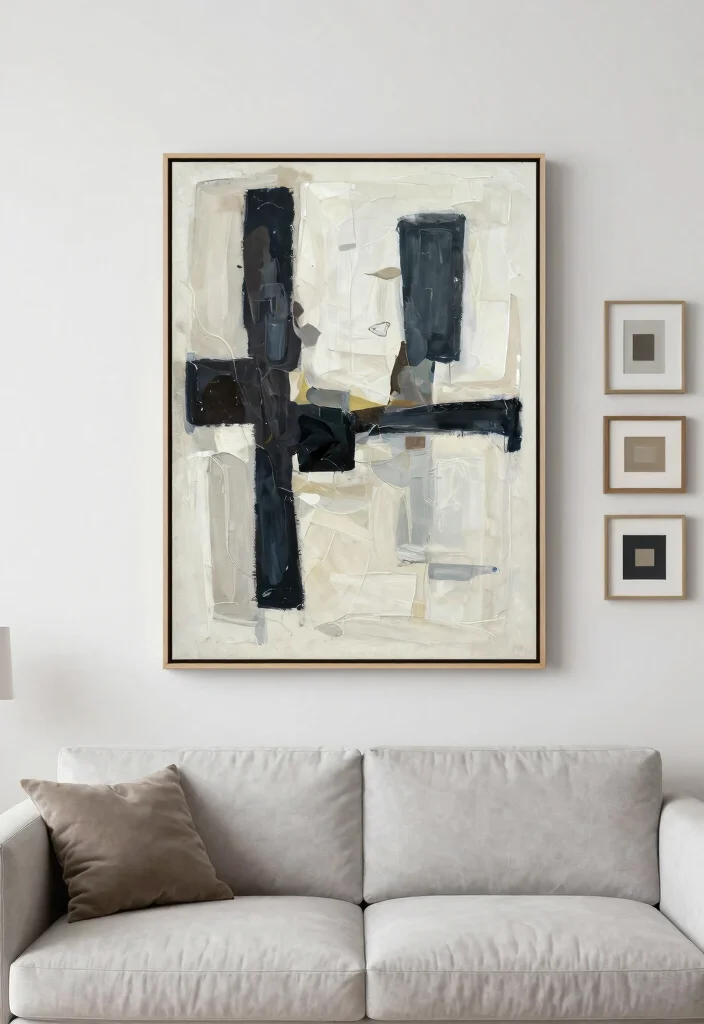
Art adds a personal touch to a minimalist living room, enhancing its character without overwhelming the space. Choose a few striking pieces that resonate with you and reflect your style. Large canvases or framed prints can serve as focal points, while smaller artworks can be arranged in cohesive groupings.
To maintain the minimalist aesthetic, keep frames simple and select art pieces that complement your color palette. This method celebrates your individuality while promoting a clean and organized look. It’s a trend that emphasizes personal expression in home decor.
Here are some art tips:
– Select art pieces that complement the color palette.
– Use a gallery wall to showcase smaller works without clutter.
– Keep the surrounding decor simple to let the art shine.
Your personal artwork creates a unique touch in your minimalist living room, helping to make it feel like home.
14. Maintain Clean Lines
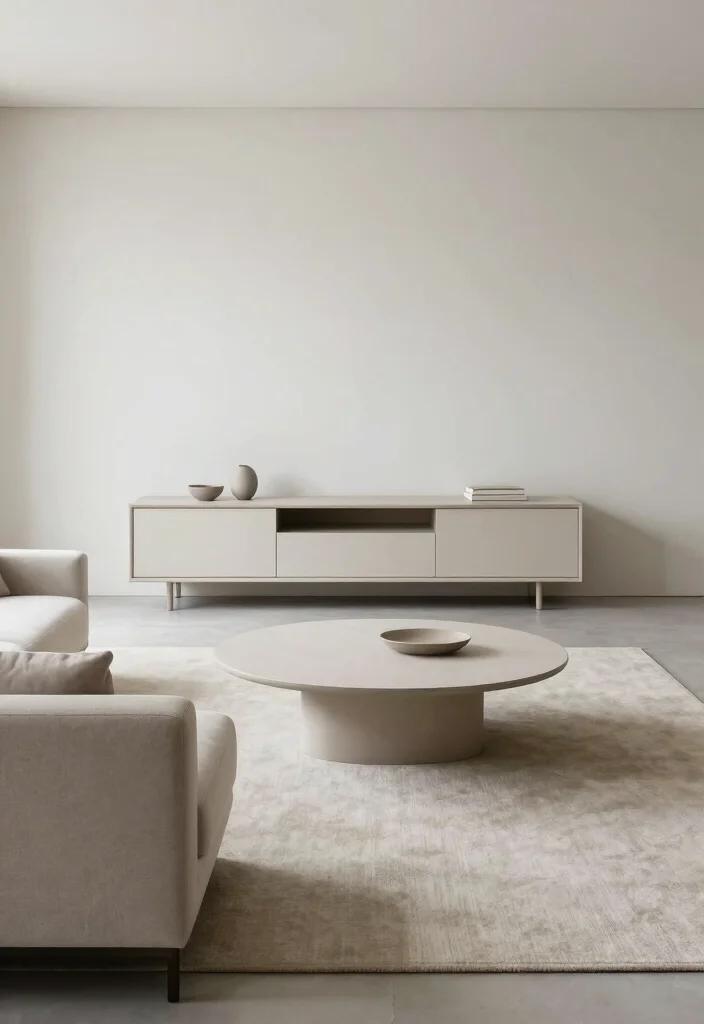
Clean lines are vital to minimalist design, contributing to a polished and calm look in your living room. Choose furniture with straight edges and simple shapes, avoiding overly ornate details that distract from the overall aesthetic. This approach not only enhances visual space but also promotes order and tranquility.
To achieve clean lines, look for pieces with geometric shapes and unembellished surfaces. Keeping color schemes simple will further enhance the effect. Opt for cabinetry with minimal hardware for a streamlined look. This trend aligns with the ethos of minimalism, emphasizing simplicity and elegance.
Here are some clean line tips:
– Look for pieces with geometric shapes and unembellished surfaces.
– Keep color schemes simple to enhance the clean lines.
– Opt for cabinetry with minimal hardware for a streamlined look.
Incorporating clean lines reinforces the minimalist aesthetic, creating an effortlessly chic and serene space.
❝ Fun fact: clean lines can visually expand a room by up to 25%, while a calm palette reinforces focus. In living room simple design, straight edges and unembellished surfaces cut noise and boost everyday calm.
15. Keep Floor Space Clear
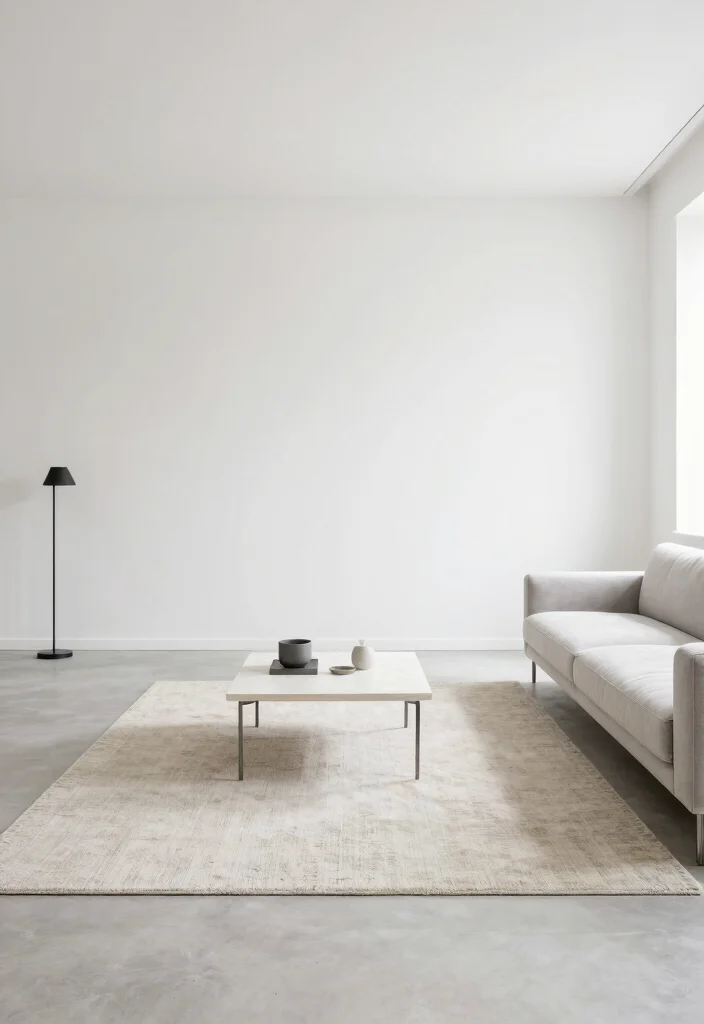
A spacious floor area contributes to a calm and open feel in your living room. Aim to keep it clear of clutter and excess furniture. By minimizing items on the floor, you’ll create an unobstructed flow throughout the space, enhancing its serenity and inviting comfort.
To maintain clear floor space, choose furniture that serves multiple purposes to reduce the number of pieces needed. Take advantage of vertical storage solutions to keep the floor area open. This trend supports a minimalist lifestyle, focusing on functionality and simplicity.
Follow these floor space tips:
– Choose furniture that serves multiple purposes to reduce pieces needed.
– Use vertical space for storage, keeping the floor area open.
– Arrange seating in a way that promotes flow without blocking pathways.
Maintaining a clear floor space enhances the minimalist vibe, making the room feel larger and more inviting.
16. Regularly Declutter
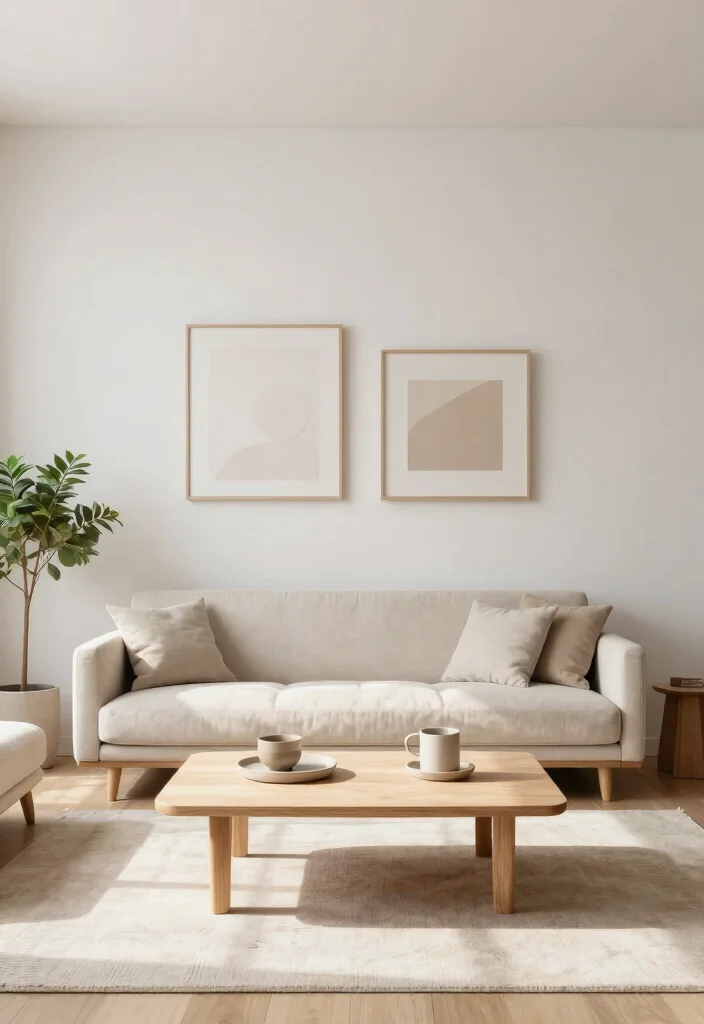
Regular decluttering is essential for preserving a minimalist living room. Make it a habit to assess your space and remove items that no longer serve a purpose or bring you joy. A clean and orderly environment sustains the calm and serene atmosphere you’ve worked hard to create.
To effectively declutter, set a schedule for evaluating decor pieces and furniture. Donate or recycle items you no longer need, and keep only those that enhance your living experience. This practice aligns with the principle of minimalism, focusing on intentional living and simplicity.
Consider these decluttering tips:
– Set a schedule to evaluate decor pieces and furniture regularly.
– Donate or recycle items that you no longer need.
– Keep only those items that enhance your living experience.
By committing to regular decluttering, you’ll ensure a clean, calm living room that remains a sanctuary of simplicity.
Conclusion
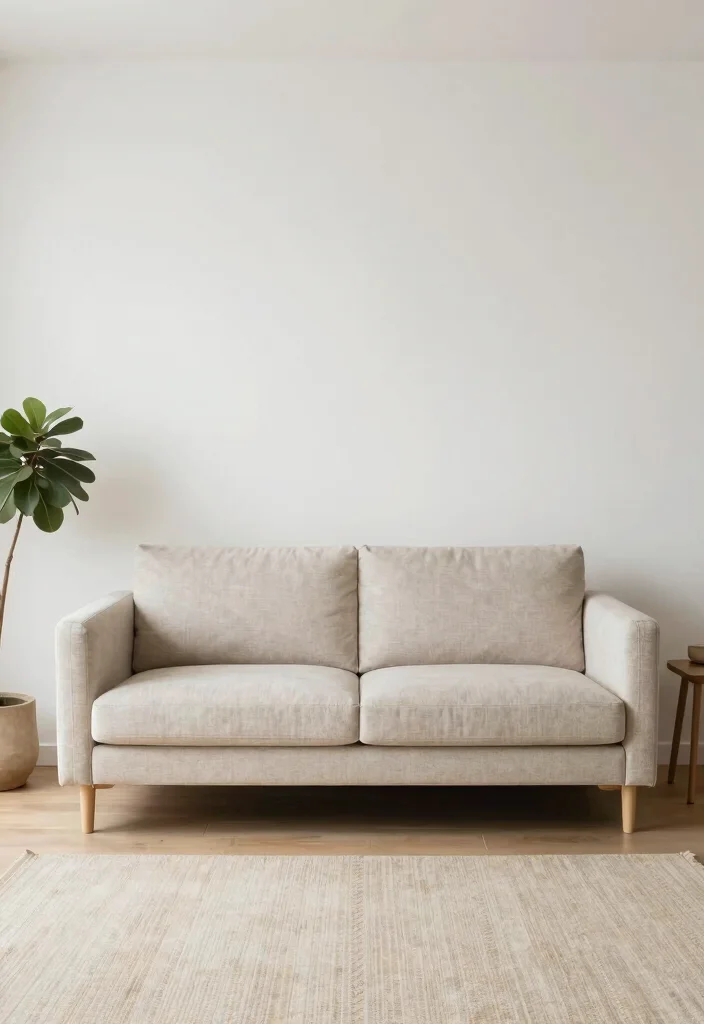
Incorporating these sixteen design ideas into your living room creates a peaceful and inviting atmosphere that embraces the essence of minimalist decor. By focusing on simplicity, neutral tones, functional furniture, and intentional design choices, you can establish a space that not only looks beautiful but also nurtures relaxation and connection. Keep exploring new ideas to enhance your simple living space, and remember, the journey to a calm home is all about thoughtful choices and a commitment to simplicity.
Frequently Asked Questions
What are practical steps to achieve a living room simple design with a minimalist vibe?
Start by decluttering and choosing a neutral color palette to set the calm base. Then select a few minimalist living room essentials with clean lines and good quality construction for a stylish furniture arrangement that doesn’t overwhelm the space. Limit decorative items to a small number of meaningful pieces to keep the look airy. Add texture with natural materials like wood, linen, and wool. Layer lighting with soft, warm lamps to create a cozy living space feel. Plan for hidden storage and multipurpose furniture to maintain the living room simple design.
How can I make a minimalist living room feel cozy and inviting?
Even with a minimalist approach, you can create warmth by layering cozy living space textures like plush throws, fuzzy rugs, and tactile cushions. Choose a few warm neutrals and combine them with natural materials (wood, stone) to add depth. Use layered lighting at multiple levels—ambient, task, and accent—to avoid a cold, stark look, while keeping clutter to a minimum for the living room simple design.
What are some modern decor ideas that fit a neutral color palette for a calm living room?
Try pairing a neutral color palette with modern decor ideas like a sculptural light fixture, a streamlined stylish furniture arrangement, and art with clean lines. Introduce texture with a natural fiber rug, linen curtains, and matte-finish wood furniture. Keep decorative elements to a few purposeful pieces to preserve the cozy living space feel while maintaining a living room simple design.
How should I arrange furniture for a stylish furniture arrangement in a minimalist living room?
Start with a clear focal point (a fireplace, TV, or view) and build a conversation area with a sofa and a couple of chairs that face it. Keep pathways open and leave negative space to breathe. Choose stylish furniture arrangement with low-profile pieces to preserve sightlines, anchor the room with a simple rug, and use neutral color palette to unify the space. Add a few textured textiles to create cozy living space without clutter.
What common mistakes should I avoid when pursuing living room simple design?
Avoid overcrowding the room with too many pieces or busy patterns. Resist mixing too many colors and inconsistent scales—stick to a neutral color palette and cohesive materials. Don’t skip lighting or storage, as poor lighting makes a room feel cold and storage issues create clutter and defeat the calm vibe of a living room simple design. Finally, don’t overlook scale: oversized furniture can overwhelm a small space; opt for clean lines and multifunctional pieces to maintain a cozy living space.
Related Topics
home decor
minimalist living
modern decor ideas
cozy living space
neutral color palette
stylish furniture arrangement
easy updates
beginner friendly
simple design techniques
scandinavian style
calm interiors
small space solutions